
FHA vs. VA Loan:
Which Is Better for Veterans?
If you're eligible for a VA loan, it's almost always the better choice, 0% down, no mortgage insurance, and lower rates. But FHA has a role to play too. Here's the full picture.
Bottom Line First
If You Have VA Eligibility, Use It
We're going to be direct: for eligible veterans, active-duty service members, and qualifying surviving spouses, the VA loan is the strongest mortgage program available in the United States. Zero down payment, no monthly mortgage insurance, and typically the lowest interest rates on the market. In a head-to-head comparison, VA wins on nearly every metric.
FHA still has a role for veterans in specific situations, when VA entitlement is used up, when a property doesn't meet VA standards, or when a non-veteran co-borrower changes the picture. But if you have full VA eligibility and a qualifying property, there's rarely a financial reason to choose FHA instead. Read the FHA mortgage insurance breakdown to see how significant the MIP savings are with VA.
Side by Side
FHA vs. VA: Full Comparison
Every major qualification and cost factor compared. The FHA column is highlighted.
| Factor | FHA Loan | VA Loan |
|---|---|---|
| Eligibility | Any buyer | Veterans, active duty, surviving spouses |
| Down Payment | 3.5% minimum | 0%, true zero down |
| Mortgage Insurance | MIP for life of loan (<10% down) | None, no monthly MIP or PMI |
| Upfront Fee | 1.75% UFMIP | 1.4% to 3.6% funding fee (varies) |
| Minimum Credit Score | 580 (3.5% down) · 500 (10% down) | No VA minimum (most lenders: 620) |
| Max Debt-to-Income | Up to 57% | No hard cap (residual income test) |
| Loan Limits | $498,257 floor (varies by county) | No limit for full-entitlement borrowers |
| Property Types | 1 to 4 units, condos, manufactured | 1 to 4 units, VA-approved condos |
| Seller Concessions | Up to 6% | Up to 4% |
| Residual Income Test | Not required | Required, ensures adequate living expenses |
| Reusable Benefit? | Unlimited use | Yes, entitlement can be restored |
| After Bankruptcy (Ch. 7) | 2-year wait | 2-year wait |
| After Foreclosure | 3-year wait | 2-year wait |
Upfront Costs
VA Funding Fee vs FHA UFMIP
Both programs charge an upfront fee, but they work differently. FHA's upfront mortgage insurance premium (UFMIP) is a flat 1.75% regardless of down payment or borrower history. The VA funding fee is variable, ranging from 1.4% to 3.6% depending on several factors.
| Scenario | VA Funding Fee | FHA UFMIP |
|---|---|---|
| First use, 0% down | 2.15% | 1.75% |
| First use, 5%+ down | 1.5% | 1.75% |
| First use, 10%+ down | 1.25% | 1.75% |
| Subsequent use, 0% down | 3.3% | 1.75% |
| Disabled veteran | Exempt ($0) | 1.75% |
Disabled veterans pay no funding fee
Veterans with a service-connected disability rating of 10% or higher are completely exempt from the VA funding fee. Combined with no monthly mortgage insurance and no down payment, this makes the VA loan extraordinarily cost-effective for disabled veterans. Even the 1.75% FHA UFMIP becomes a significant comparative cost.
Even when the VA funding fee is higher than FHA's UFMIP (which occurs at 0% down on first use and especially on subsequent use), the absence of monthly mortgage insurance on VA loans makes up the difference quickly. The break-even typically occurs within the first 12 to 18 months, after which VA is saving you money every single month for the remaining life of the loan.
Want To Know What This Looks Like On Your Numbers?
Every scenario is different. A soft credit check tells you where you actually stand, and nothing hits your report until you decide to move forward.
The Biggest Advantage
No Monthly Mortgage Insurance: The Long-Term Math
This is the single most consequential difference between VA and FHA for eligible borrowers. FHA charges 0.55% annually in mortgage insurance premiums for the life of the loan (when putting less than 10% down). VA charges zero, no monthly MIP, no annual premium, nothing. Over time, this gap becomes enormous.
Cumulative MIP Cost Comparison
$300,000 Loan · 30-Year Fixed
How much FHA mortgage insurance costs over time, money that VA borrowers don't pay.
| Timeframe | FHA MIP Paid (Cumulative) | VA MIP Paid |
|---|---|---|
| Year 1 | ~$1,650 + $5,250 UFMIP | $0 |
| Year 5 | ~$13,300 total | $0 |
| Year 10 | ~$21,100 total | $0 |
| Year 30 | ~$54,000+ total | $0 |
Illustrative example. FHA MIP decreases slightly annually as the loan balance drops. VA funding fee (if applicable) is a separate one-time cost not shown here. Mortgages by Channing · NMLS #1660690.
The numbers speak for themselves. Over the full term of a $300,000 loan, an FHA borrower pays over $50,000 in mortgage insurance premiums that a VA borrower avoids entirely. Even accounting for the VA funding fee (which is higher upfront in some scenarios), the net savings from VA's no-MIP structure are substantial by any measure.
When FHA Wins
Situations Where FHA Makes Sense for Veterans
Despite VA's clear advantages, there are genuine scenarios where a veteran might be better served by FHA. These are edge cases, but they're real, and knowing about them helps you make a fully informed decision.
When a Veteran Should Consider FHA
- 1VA entitlement is fully usedIf you already have a VA loan on another property and your remaining entitlement doesn't cover the new purchase, FHA becomes a practical alternative. This is uncommon but happens with borrowers who own multiple properties.
- 2Property doesn't meet VA Minimum Property RequirementsVA has strict property standards. If a home passes FHA appraisal standards but fails VA's (different criteria for items like termite clearance, well water testing), FHA may be the path to close the deal.
- 3Condo is FHA-approved but not VA-approvedThe VA and FHA maintain separate condo approval lists. If the condominium project you want is on the FHA list but not the VA list, FHA is your option. VA condo approval can be pursued but takes time.
- 4Non-veteran co-borrower scenarioIf you're buying with a non-veteran (partner, family member) who needs to be on the loan, VA loans can be complicated. FHA allows any qualifying co-borrower without special considerations.
- 5Higher seller concessions neededFHA allows sellers to contribute up to 6% of the purchase price toward your closing costs. VA caps this at 4%. In a negotiation where you need maximum seller assistance, the 2% gap can be meaningful.
Each of these scenarios is situational, and in many cases the VA loan can still be made to work with some additional effort. Before defaulting to FHA, explore whether the VA obstacle is surmountable, the long-term savings from no MIP are significant enough to justify extra effort in most cases. Compare the overall cost picture with the FHA vs conventional analysis for additional context.
Who Qualifies
VA Loan Eligibility: A Brief Overview
VA loan eligibility is earned through military service. Not everyone who has served qualifies, there are minimum service requirements that vary by era and duty status. Here's a summary of who can use the VA benefit.
Who Is Eligible
- Active duty service membersCurrently serving with at least 90 continuous days of active duty.
- VeteransHonorably discharged with minimum service requirements met (90 days wartime, 181 days peacetime, or 24 months, whichever applies).
- National Guard / Reserves6 years of service in the Selected Reserve or Guard, or 90 days of active duty under a federal call-up.
- Surviving spousesUnremarried surviving spouse of a veteran who died in service or from a service-connected disability. Some remarried spouses may also qualify.
Certificate of Eligibility (COE)
To use a VA loan, you need a Certificate of Eligibility, a document from the VA confirming your entitlement. Your lender can pull this electronically in most cases, or you can request it directly through the VA's eBenefits portal.
The COE shows your total entitlement, how much has been used (if any), and your remaining available benefit. This determines whether you can use VA for a new purchase and at what level.
If you're unsure whether you qualify, Mortgages by Channing can check your COE status as part of the pre-approval process, no obligation, no cost for the inquiry.
Not eligible for VA? FHA is the next best option
If you don't meet VA service requirements, or if you're a civilian buying with a veteran partner, FHA is the most accessible government-backed alternative. It offers the lowest down payment for non-VA buyers and the most flexible qualification standards available.
Want To Know What This Looks Like On Your Numbers?
Every scenario is different. A soft credit check tells you where you actually stand, and nothing hits your report until you decide to move forward.
Real Scenarios
Which Loan Wins for Your Situation
The FHA vs VA decision is usually straightforward, but here's how it plays out across different borrower profiles.
Veteran, first-time VA use, buying a single-family home
Full VA entitlement available, 640 credit score, standard property. VA wins overwhelmingly, 0% down, no MIP, and a funding fee of 2.15% that's more than offset by the monthly insurance savings within the first year. No reason to consider FHA here.
Veteran with existing VA loan on another property
Still has remaining entitlement but it may not cover the full purchase price. Check with your lender, if remaining entitlement is sufficient, VA still wins. If not, FHA at 3.5% down is the fallback. The funding fee on subsequent use (3.3%) is higher but still worth it for most borrowers.
Non-veteran buying their first home
No military service means no VA eligibility. FHA with 3.5% down is the most accessible government loan option. Consider USDA if the property is in an eligible area and income qualifies.
Veteran + non-veteran partner buying together
VA loans can include a non-veteran co-borrower, but the non-veteran's portion may not be covered by the VA guarantee, which can affect down payment and terms. FHA simplifies this: any qualifying borrower can be on the loan with no complications. Evaluate both options with your lender.
Disabled veteran, first purchase
VA is the clear winner by an even wider margin. The funding fee is waived entirely for veterans with a 10%+ disability rating. Combined with 0% down and no MIP, this is the most cost-effective mortgage program available to any borrower, period.
Veteran or Not, We Have Your Loan
Mortgages by Channing does both VA and FHA loans. We'll compare them honestly and show you which one costs less for your specific situation.
Common Questions
FHA vs VA FAQ
Questions about choosing between FHA and VA financing.
The Application
Apply From Your Phone In Fifteen Minutes
The whole FHA application runs on your phone. Snap photos of your documents, connect your bank, and you're done. It reaches me the minute you submit it.
- Starts with a soft credit check, so your score is never touched
- We check your FHA numbers before anyone pulls hard credit
- Upload documents with your phone camera, no scanner needed
- You hear back from Channing, not from a call center queue
If the numbers say wait, I'll tell you that too, and then we make a plan to fix whatever is in the way.
Complete Your Application
Five short steps. Most people finish in about fifteen minutes.
- Tell us what you're looking for
- We check your FHA numbers
- Upload your documents
Your pre-approval letter is ready. I sent it to your email and to your agent.
Got your application. I'm reviewing it now and will call you this afternoon.
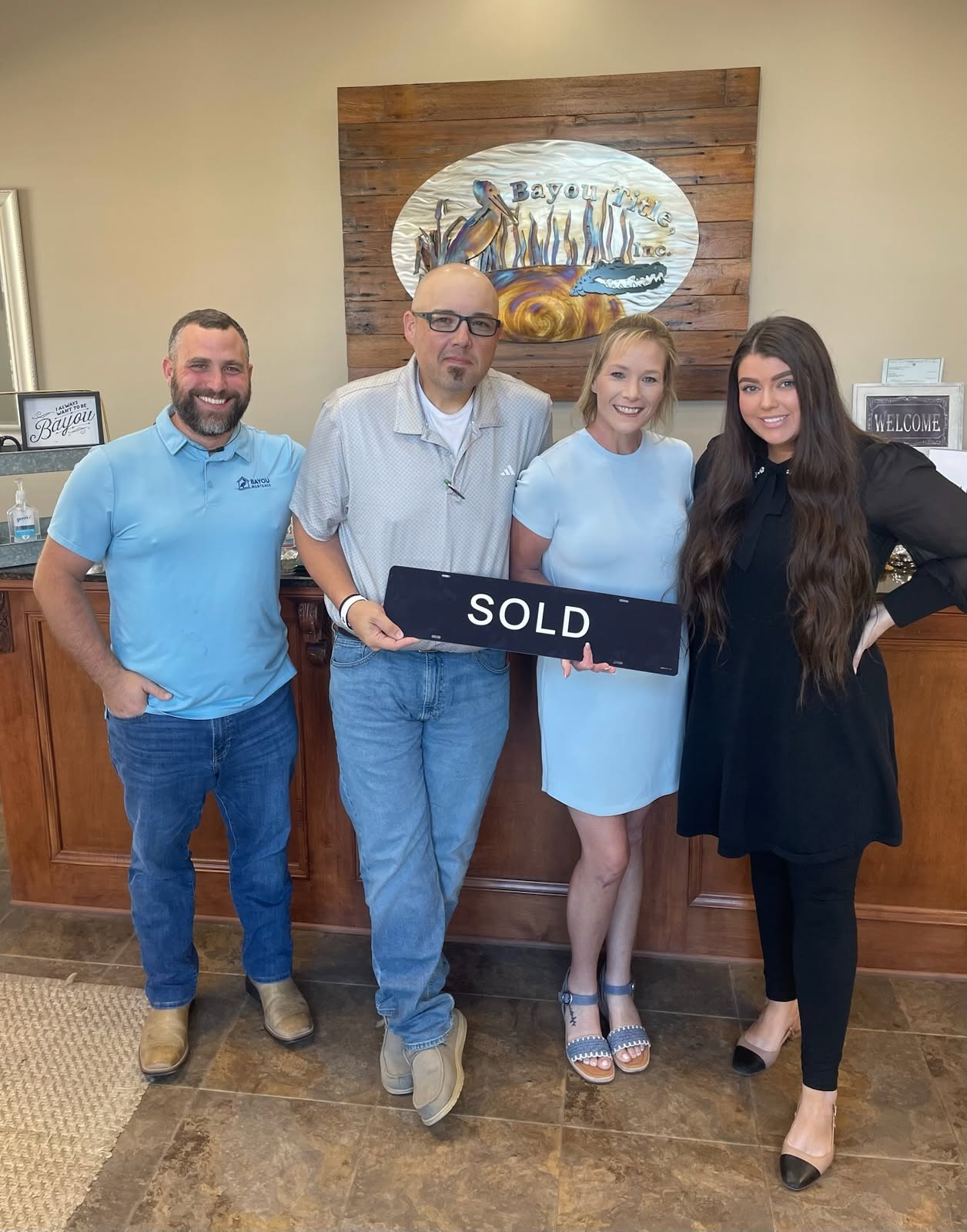
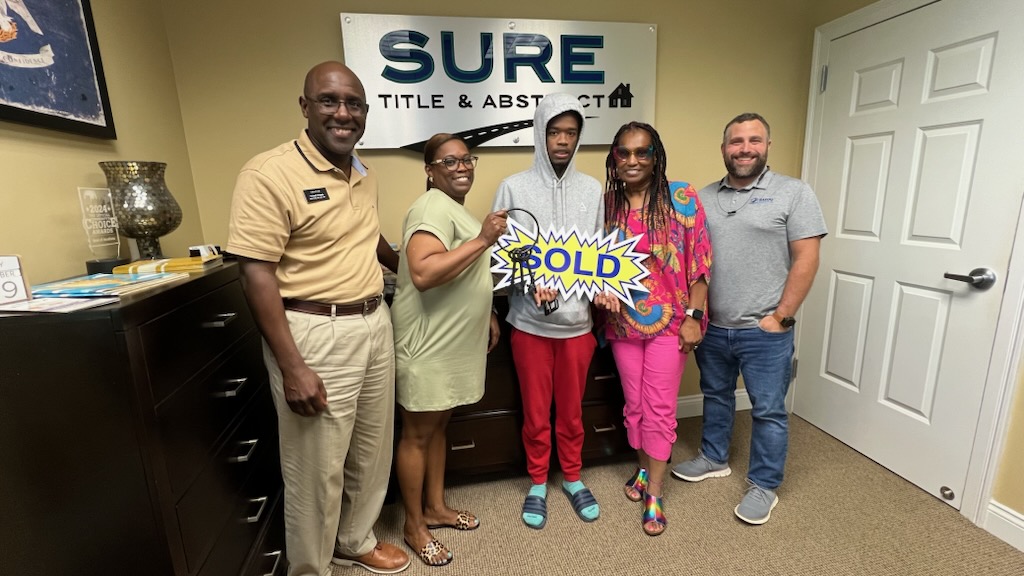
Real Closings
Real Clients.
Real Closings.
Real families we have helped get from pre-approval to keys in hand.

Find Out Where You
Actually Stand
A soft credit check tells you what you qualify for before anyone pulls hard credit. If the numbers say wait, I will tell you that too, and then we make a plan to fix whatever is in the way.
See What I Qualify ForMortgages by Channing · 337-476-2623 · Licensed across Louisiana · NMLS #1660690