
USDA Loan Requirements:
Income, Area & Credit Eligibility
USDA has two qualification layers, borrower requirements and property location requirements. Here's exactly what lenders and the USDA agency look at before approving your loan.
The Basics
What USDA Actually Requires
USDA requirements exist because the federal government is guaranteeing your loan. Every requirement, income limits, eligible location, credit score, employment history, is designed to serve the program's mission: making homeownership accessible in rural and suburban communities for moderate-income buyers.
USDA has two qualification layers most loans don't: the property must be in an eligible area, and your household income must be under the county limit. If both of those clear, the rest of the process is straightforward. Mortgages by Channing checks both before you spend time on paperwork.
Credit
Credit Score Requirements
USDA uses your middle credit score, the middle of three scores pulled from Equifax, Experian, and TransUnion. If you have a co-borrower, the lower of the two middle scores is used. The 640 threshold is for automated (GUS) approval. Below 640, manual underwriting is required, harder but not impossible.
USDA Credit Score Tiers
- 640 or higherQualifies for automated GUS approval. Full USDA program available with streamlined processing.
- 580 to 639Manual underwriting required. More documentation, stricter compensating factors, but USDA approval is still possible. See credit guide
- Below 580Below most lenders' USDA minimum. Focus on credit rebuilding. See bad credit options
What Lenders Look Beyond the Score
Your score is the entry point, but underwriters also review your full credit history: payment history over the past 12 months, unpaid collections, judgments, charge-offs, and any derogatory items in the last 24 months carry significant weight.
A 620 score with a 30-day late from last month may be harder to approve than a 590 score with a clean 24-month history. The story behind the number matters.
Lender overlays on credit
Many lenders add a credit score overlay of 620 or even 640 on top of FHA's 580 minimum. This is legal, lenders can be more restrictive than FHA. Mortgages by Channing works to FHA minimums, not internal overlays. If you've been turned down elsewhere for credit score, it's worth a second look. See full credit score guide
Income
Income Requirements, Limits & DTI
USDA has both a maximum income limit (115% of area median income) and a maximum DTI ratio. You need to satisfy both. The income ceiling is what makes USDA unique, it's the only major mortgage program where earning too much disqualifies you.
USDA Income Ceiling
Your total household income must be at or below 115% of the area median income for your county and household size. This counts all adults in the home, not just borrowers. Deductions for dependents, disability, and child care can reduce your qualifying income.
Mortgages by Channing runs this calculation for you before you start the application.
DTI Limits
Standard USDA guideline: 29/41, 29% front-end (housing) and 41% back-end (total debt). With strong compensating factors like excellent credit, significant reserves, or low housing payment history, up to 44% back-end may be approved.
DTI is evaluated after confirming your income is within the USDA limit.
USDA accepts a wide range of income types. The key is that income must be documented, stable, and likely to continue. Remember: ALL household income counts toward the limit, even if that person isn't on the loan.
Income Types FHA Accepts
- W-2 employment incomeMost straightforward. Recent pay stubs + 2 years W-2s.
- Self-employment income2 years of tax returns required. Average of 2 years used (or lower year if declining).
- Part-time incomeMust have 2-year history of part-time work to count it.
- Social Security / disabilityAward letter required. Not subject to income tax, can be grossed up 25% for qualifying.
- Alimony / child supportMust be court-ordered, documented, and have 3+ years remaining.
Income That Doesn't Count
- Cash income with no documentationUndocumented income cannot be used for qualification.
- New income without historyStarting a new job right before applying, income may not count until first paystub received.
- Declining self-employmentIf your last 2 years of Schedule C shows declining net income, lenders use the lower year.
- Gift incomeGifts can fund the down payment but cannot count as qualifying income.
Want To Know What This Looks Like On Your Numbers?
Every scenario is different. A soft credit check tells you where you actually stand, and nothing hits your report until you decide to move forward.
Employment
Employment History Requirements
USDA requires a 2-year employment history with consistent, documented income. The rules are similar to FHA: 2 years in the same field, not necessarily the same employer. The bigger focus for USDA is that income is stable and likely to continue for at least 3 years from closing.
| Situation | FHA Treatment | Documentation Needed |
|---|---|---|
| Same employer 2+ years | Straightforward | Pay stubs + W-2s |
| Job change, same field | Generally acceptable | Both employer records |
| Career change | May require explanation | Letter of explanation |
| Gap under 30 days | Generally acceptable | Brief explanation |
| Gap 30+ days | Requires explanation | Gap letter explaining reason |
| Recently returned to work | Acceptable with history | Prior employment verification |
| Recent graduate, first job | Acceptable if in studied field | Diploma / transcript + offer letter |
The gap letter
If you have an employment gap of 30+ days, a gap letter is a short written explanation of what you were doing (caring for a family member, medical situation, layoff, relocation) and that you're now employed. It's not a big deal, underwriters see them constantly. What matters is having a reasonable explanation and being back to work.
Assets
Down Payment & Asset Requirements
FHA's 3.5% minimum down payment is one of its most flexible features, but the source of those funds matters. Lenders verify where your down payment comes from and how long it's been in your account. This is called seasoning.
Acceptable Down Payment Sources
- Personal bank accountTypically need 2 months of statements showing funds. Large deposits may require sourcing.
- Gift from family member100% of down payment can be gifted. Requires a gift letter stating no repayment is expected. See gift fund rules
- Down payment assistanceFHA is compatible with most DPA programs. See DPA programs
- Proceeds from home saleDocumented with HUD-1 or closing disclosure from prior sale.
What About Reserves?
FHA does not require cash reserves after closing for most single-family purchases. However, lenders may overlay a reserve requirement (typically 1 to 3 months of housing payments) for borrowers with lower credit scores or higher DTI.
For 3 to 4 unit properties, FHA does require 3 months of PITI reserves after closing.
Property
USDA Property Requirements
USDA doesn't just underwrite the borrower, it requires the property to be in an eligible area and meet USDA property condition standards. The two-part test: location eligibility (checked on the USDA map) and property condition (verified at appraisal).
What Can Fail a USDA Appraisal
- Peeling or chipping paint (pre-1978 homes)Lead paint hazard, must be remediated before closing.
- Roof with less than 2 years of useful lifeAppraiser estimates remaining life, below 2 years requires repair or replacement.
- Non-functioning utilitiesHeat, electrical, plumbing must be operational at time of appraisal.
- Broken windows or doorsSecurity and habitability issue, must be repaired.
- Exposed wiring or safety hazardsImmediate safety concerns must be corrected.
- Evidence of active pest infestationTermites or other wood-destroying insects require treatment and clearance.
Property Types USDA Accepts
- Single-family homes (1 unit)Most common FHA purchase. Must be primary residence.
- 2 to 4 unit propertiesYou must occupy one unit. Higher loan limits apply. 3 months reserves required.
- FHA-approved condominiumsCondo project must be on HUD's approved list or go through spot approval.
- Manufactured homes on permanent foundationMust meet HUD manufactured housing standards, titled as real property.
- Investment properties / vacation homesFHA is primary residence only. You must intend to occupy within 60 days of closing.
Want To Know What This Looks Like On Your Numbers?
Every scenario is different. A soft credit check tells you where you actually stand, and nothing hits your report until you decide to move forward.
Lender Overlays
USDA Guidelines vs. Lender Overlays
This is the most misunderstood part of USDA lending. USDA sets the guidelines, individual lenders can add stricter requirements on top. These are called overlays. They're not USDA rules, they're lender risk policies. Many USDA denials are overlay-based, not guideline-based.
Common USDA overlays that cause unnecessary denials
Credit score overlays (660+ instead of USDA's 640 for automated approval). DTI caps tighter than USDA allows. Refusing manual underwriting when USDA permits it. Requiring paid collections when USDA does not. If another lender denied your USDA application, it may have been their overlay, not a USDA rule. Ask Mortgages by Channing to review against actual USDA guidelines.
Mortgages by Channing works to USDA guidelines, not internal overlays. We also submit through GUS and pursue manual underwriting when needed, a human underwriter can evaluate compensating factors that the automated system misses.
Quick Reference
USDA Requirements Checklist
Every USDA requirement in one place. Use this as your pre-application checklist.
USDA Qualification Summary
2025 USDA Requirements at a Glance
| Requirement | FHA Guideline (2025) |
|---|---|
| Credit Score (3.5% down) | 580 or higher |
| Credit Score (10% down) | 500 to 579 |
| Minimum Down Payment | 3.5% of purchase price |
| Front-End DTI | 31% guideline (flexible with compensating factors) |
| Back-End DTI | Up to 57% with compensating factors |
| Employment History | 2 years same field (not necessarily same employer) |
| Income Documentation | 2 years tax returns, W-2s, 30 days pay stubs |
| Down Payment Source | Own savings, gift, DPA, must be documented and sourced |
| Bankruptcy (Ch. 7) | 2-year waiting period from discharge |
| Foreclosure | 3-year waiting period from completion |
| Property Occupancy | Primary residence only, must occupy within 60 days |
| Property Condition | Must meet FHA Minimum Property Standards at appraisal |
| Citizenship | US citizens, permanent residents, eligible non-permanent |
Guidelines current as of 2025. Individual lender overlays may apply. Mortgages by Channing · NMLS #1660690 · Equal Housing Lender.
Common Questions
USDA Requirements FAQ
Questions specific to USDA qualification requirements.
Think You Qualify for USDA?
Let Mortgages by Channing check your area, run your household income, and review your credit. We'll give you a straight answer before you spend time on paperwork.
The Application
Apply From Your Phone In Fifteen Minutes
The whole USDA application runs on your phone. Snap photos of your documents, connect your bank, and you're done. It reaches me the minute you submit it.
- Starts with a soft credit check, so your score is never touched
- We check the property address against the USDA map for you
- Upload documents with your phone camera, no scanner needed
- You hear back from Channing, not from a call center queue
If the numbers say wait, I'll tell you that too, and then we make a plan to fix whatever is in the way.
Complete Your Application
Five short steps. Most people finish in about fifteen minutes.
- Tell us what you're looking for
- We check USDA eligibility
- Upload your documents
Your pre-approval letter is ready. I sent it to your email and to your agent.
Got your application. I'm reviewing it now and will call you this afternoon.
Real Closings
Real Clients.
Real Closings.
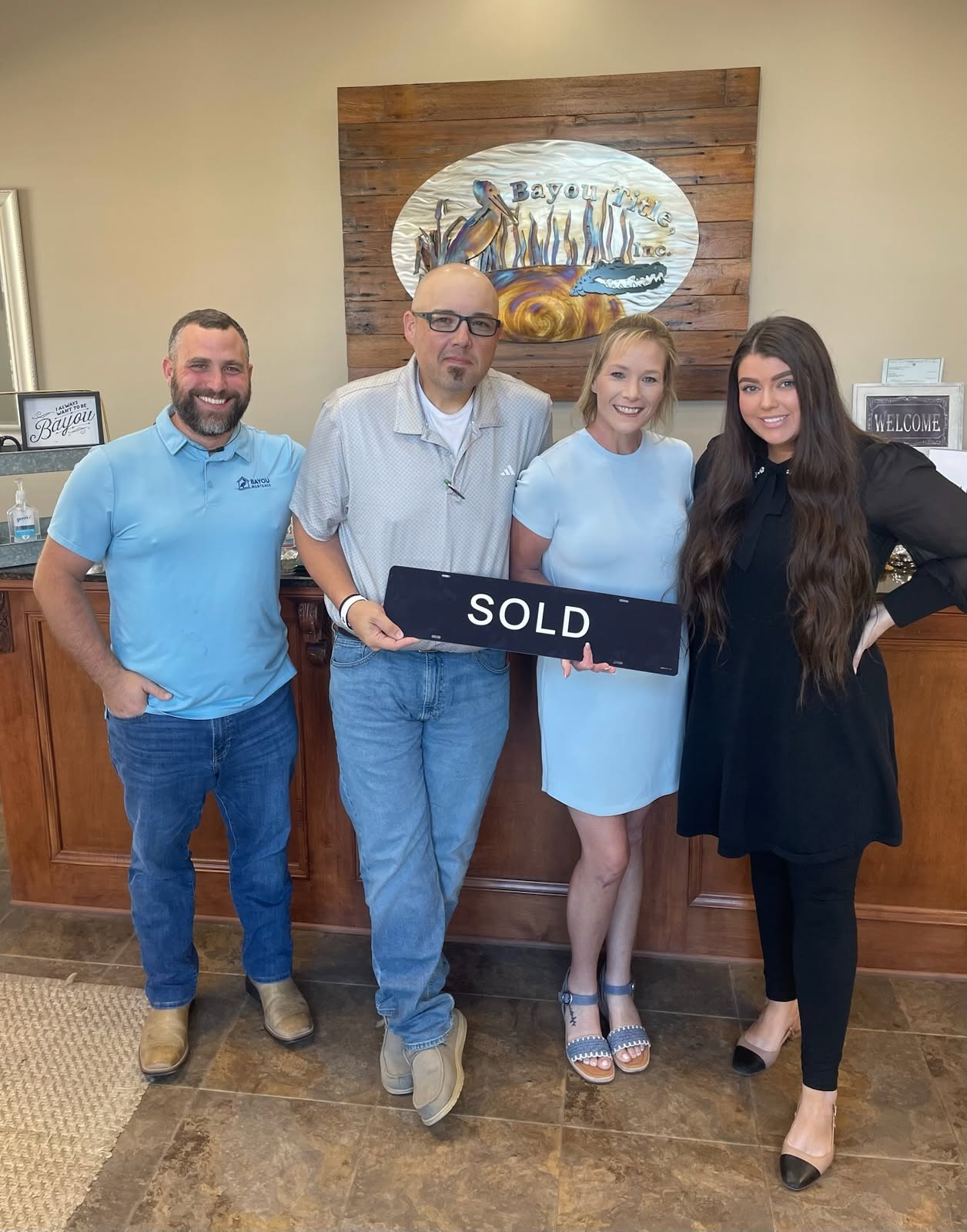
Real families we have helped get from pre-approval to keys in hand.



Find Out Where You
Actually Stand
A soft credit check tells you what you qualify for before anyone pulls hard credit. If the numbers say wait, I will tell you that too, and then we make a plan to fix whatever is in the way.
Check My AddressMortgages by Channing · 337-476-2623 · Licensed across Louisiana · NMLS #1660690