
USDA vs. Conventional Loan:
Which Saves You More?
USDA offers zero down and lower fees, but only in eligible areas. Conventional gives you location freedom and PMI that eventually disappears. The right pick depends on where you are buying, what you have saved, and how long you plan to stay.
The Core Trade-Off
USDA Saves Money. Conventional Offers Freedom.
This comparison comes down to a fundamental trade-off. USDA provides zero down payment and lower ongoing fees, but restricts you to eligible rural and suburban areas with household income limits. Conventional loans work anywhere, fund any property type, and let you eliminate mortgage insurance at 20% equity, but require a down payment and charge higher rates to borrowers below 740.
If your target property is in a USDA-eligible area and your household income qualifies, USDA almost always produces a lower total cost of homeownership over the first 10 years. If you are buying in a metro center or need a jumbo loan amount, conventional is your only realistic option. The USDA eligibility map is the first thing to check.
Side by Side
USDA vs. Conventional: Full Comparison
Every major factor compared. The highlighted column is USDA.
| Factor | USDA Guaranteed | Conventional |
|---|---|---|
| Down Payment | 0% | 3 to 20% |
| Minimum Credit Score | 640 (auto) · lower via manual UW | 620 to 640 (most lenders) |
| Location Restrictions | USDA-eligible areas only | None, anywhere |
| Income Limits | 115% of area median (household) | None |
| Upfront Fee | 1% guarantee fee (financed) | None |
| Annual Insurance | 0.35% (life of loan) | PMI: 0.2 to 2% (cancels at 20%) |
| Interest Rates | Typically 0.25 to 0.50% below conventional | Market rate, credit-score dependent |
| Property Types | Primary residence, single-family | Primary, second home, investment |
| Seller Concessions | Up to 6% | 3% (if LTV >90%) · 6% (LTV ≤90%) |
| Max Loan Amount | No set limit (based on ability to repay) | $806,500 conforming · higher for jumbo |
| Gift Funds | Allowed, no restrictions | Allowed with source documentation |
| Occupancy | Primary residence only | Primary, second, or investment |
Cost Analysis
Mortgage Insurance and Fees: The Long-Term Math
The fee structures of USDA and conventional loans work differently, and the gap between them widens or narrows depending on credit score, down payment, and how long you keep the loan. Understanding this math is essential to making the right choice.
USDA Fee Structure
- 1% upfront guarantee feeRolled into the loan balance. On $250k loan = $2,500 added to your mortgage. You do not pay it at closing. Full guarantee fee breakdown
- 0.35% annual feeOn $250k balance ≈ $73/month. This rate is the same regardless of your credit score, a major advantage for borrowers below 740.
- Does not cancelThe annual fee stays for the life of the loan. The only way to eliminate it is to refinance into a conventional loan at 20%+ equity.
Conventional PMI Structure
- No upfront feeUnlike USDA and FHA, there is no upfront mortgage insurance premium on conventional loans.
- PMI varies by credit & LTVA 760 score with 5% down might pay 0.3%. A 640 score with 3% down could pay 1.5%+. The spread is significant.
- PMI cancels at 20% equityRequired by law under the Homeowners Protection Act. Once your loan balance hits 80% of appraised value, PMI drops off automatically.
10-Year Cost Comparison
$275,000 Purchase · 660 Credit Score
For a borrower at 660 with no down payment savings, USDA vs conventional with 3% down over 10 years, assuming 3% annual appreciation.
| Cost Item | USDA | Conventional (3% Down) |
|---|---|---|
| Down Payment | $0 | $8,250 |
| Upfront Fee | $2,750 (financed) | $0 |
| Insurance Yr 1 to 8 | ~$7,700 | ~$11,000 (PMI at ~1%) |
| Insurance Yr 9 to 10 | ~$1,900 | $0 (PMI cancelled) |
| Total Cost (10 yr) | ~$12,350 | ~$19,250 |
Illustrative example. Actual costs vary by exact rate, PMI tier, appreciation, and loan balance. Mortgages by Channing · NMLS #1660690.
The crossover point matters
Conventional overtakes USDA in total cost only when PMI cancels and the savings compound over many years. For a 660-score borrower, that crossover often does not happen until year 15 to 20. If you plan to sell or refinance within 10 years, USDA is typically the cheaper path. See USDA refinance options
Want To Know What This Looks Like On Your Numbers?
Every scenario is different. A soft credit check tells you where you actually stand, and nothing hits your report until you decide to move forward.
The Location Question
USDA Eligibility: The Deciding Factor
If the property you want is not in a USDA-eligible area, the comparison ends, conventional (or FHA) is your path. But USDA-eligible territory is far more expansive than most buyers realize. The program covers roughly 97% of the nation's geography, including many suburbs and small communities that feel nothing like rural farmland.
The USDA eligibility map is updated periodically, and areas can gain or lose eligibility as population data changes. Always verify a specific address before assuming it qualifies or does not. Mortgages by Channing checks eligibility on every address we receive, it takes seconds and prevents wasted effort. Learn how eligibility works
Income limits apply to the entire household
Even if the property qualifies, your total household income must fall within USDA limits, typically 115% of the area median income. This includes income from all adults in the household, not just the borrowers on the loan. A household earning $140,000 in an area with a $120,000 limit would not qualify, even if only one borrower earning $70,000 applies. Check income limits
Real Scenarios
Which Loan Wins for Your Situation
The USDA vs conventional decision depends heavily on individual circumstances. Here are common buyer profiles and which program typically serves them better.
Moderate income, no savings, USDA-eligible area
Household income under the limit, zero saved for a down payment, buying in a qualifying suburb. USDA eliminates the entire down payment barrier and provides a lower rate. Conventional is not feasible without savings. USDA is the clear choice.
High income, 20% saved, metro center
Household income exceeds USDA limits and the property is in a non-eligible metro area. Even if both applied, conventional with 20% down has no PMI. USDA is not available here. Conventional wins by default and by design.
Good credit (720+), 5% saved, USDA-eligible area
Qualifies for both programs. Conventional PMI at 720 is low (~0.3%) and cancels at 20%. USDA has zero down and 0.35% annual fee that never cancels. Over 30 years, conventional may save more. Over 7 to 10 years, USDA saves on upfront cash. Worth running both scenarios with actual rate quotes.
Fair credit (640), minimal savings, eligible area
At 640, conventional PMI costs are steep (1%+) and rates are significantly higher. USDA rate and annual fee are both lower at this credit tier. Keeping the down payment in savings instead of using it for conventional further favors USDA. The math strongly favors USDA here. See bad credit USDA details
Buying a rental property or second home
USDA is limited to primary residences only. Conventional is the sole option for investment properties, vacation homes, or any non-primary occupancy scenario. No comparison needed, conventional is the only available program.
Want the Side-by-Side With Your Numbers?
Mortgages by Channing offers both USDA and conventional. We will run both scenarios using your real credit, income, and target property so you see the actual monthly payment and total cost difference.
Common Questions
USDA vs Conventional FAQ
Questions specific to choosing between USDA and conventional financing.
The Application
Apply From Your Phone In Fifteen Minutes
The whole USDA application runs on your phone. Snap photos of your documents, connect your bank, and you're done. It reaches me the minute you submit it.
- Starts with a soft credit check, so your score is never touched
- We check the property address against the USDA map for you
- Upload documents with your phone camera, no scanner needed
- You hear back from Channing, not from a call center queue
If the numbers say wait, I'll tell you that too, and then we make a plan to fix whatever is in the way.
Complete Your Application
Five short steps. Most people finish in about fifteen minutes.
- Tell us what you're looking for
- We check USDA eligibility
- Upload your documents
Your pre-approval letter is ready. I sent it to your email and to your agent.
Got your application. I'm reviewing it now and will call you this afternoon.
Real Closings
Real Clients.
Real Closings.
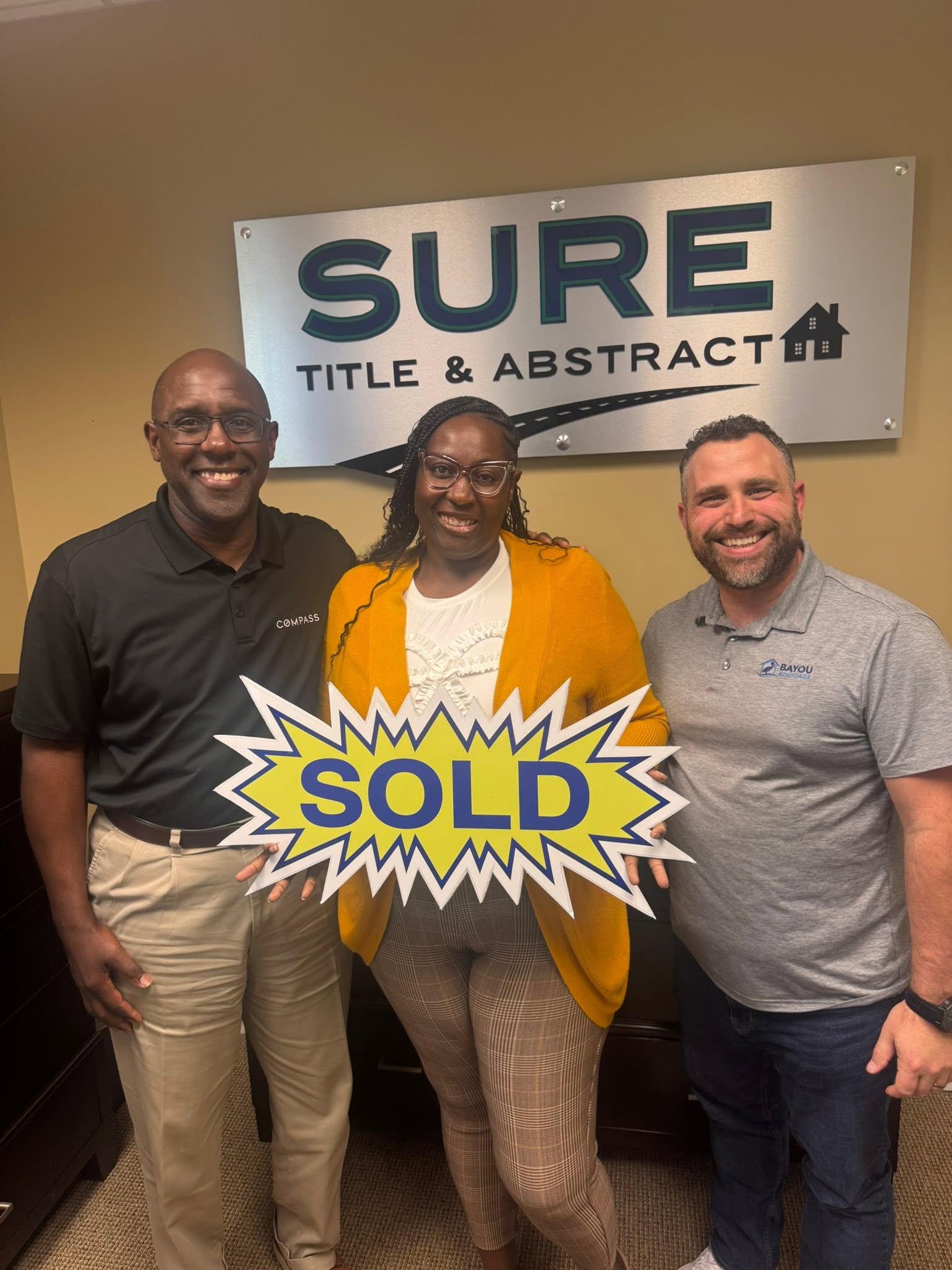
Real families we have helped get from pre-approval to keys in hand.




Find Out Where You
Actually Stand
A soft credit check tells you what you qualify for before anyone pulls hard credit. If the numbers say wait, I will tell you that too, and then we make a plan to fix whatever is in the way.
Check My AddressMortgages by Channing · 337-476-2623 · Licensed across Louisiana · NMLS #1660690