“You need 20% down for conventional.”
First Time Buyers Need Just 3%
That’s actually lower than FHA. Everyone else can put 5% down. Only investment properties need around 20%.
You don’t need 20% down for a conventional loan. First time buyers can put 3% down, less than FHA, and the mortgage insurance drops off once you hit 20% equity. I’ll show you if it beats FHA for your numbers.
A conventional loan is a mortgage that isn't insured or guaranteed by a government agency. Most follow Fannie Mae and Freddie Mac rules, allowing as little as 3% down for first time buyers with a 620 minimum credit score. Private mortgage insurance applies under 20% down and cancels at 20% equity.
Conventional loans that follow Fannie Mae and Freddie Mac rules are called conforming loans, and they have a maximum loan amount set each year. First time buyers can put as little as 3% down, and everyone else can usually put down 5%. Under 20% down, you'll pay private mortgage insurance, or PMI.
The big difference from FHA is that PMI doesn't stay forever. You can ask to remove it once you reach 20% equity, and it comes off automatically at 22%. Conventional loans also work for primary homes, second homes, and investment properties, which FHA, VA, and USDA don't.
A conventional loan is usually the best choice when your credit score is around 700 or higher and you have at least 5% to put down. With strong credit, PMI is often cheaper than FHA mortgage insurance, and you can get rid of it later.
It's also the loan for anything that isn't your primary home. If you're buying a second home or a rental, conventional is the standard route. And if you have 20% down, you skip mortgage insurance entirely.
Conventional gets harder when your score is in the low 600s or your debt is high compared to your income. PMI pricing is tied to credit, so a lower score can make the payment higher than FHA. If your credit is on the line, we'll price both and show you the difference.
I walk through credit, down payment, where your money can come from, PMI, income, and the programs that make conventional work for first time buyers.
“You need 20% down for conventional.”
That’s actually lower than FHA. Everyone else can put 5% down. Only investment properties need around 20%.
“I need two years at the same job.”
Changing jobs is fine if your pay is steady. Time in school counts too. Only overtime, bonus, and commission need a two year track record.
“I’ve owned before, so 3% down isn’t for me.”
If you haven’t owned in three years, you’re a first time buyer again. And HomeReady or Home Possible can get you 3% down even if you have owned.
Your credit score drives your rate, your PMI, and your approval on a conventional loan. That’s why we run it against FHA before you choose.
Fannie Mae and Freddie Mac set the rules, and the automated underwriting system decides most files. Here’s what it looks at.
620 minimum. Your score sets your rate, your PMI, and whether the system approves you, so higher scores pay off here more than on any other loan.
3% for first time buyers, 5% for everyone else, 10% for a second home, and about 20% or more for an investment property.
Steady, provable income with a two year history, not necessarily at the same job. Self employed income is averaged from two years of tax returns.
The guideline is 43%, but strong files with good credit, reserves, or a bigger down payment can be approved up to just under 50%.
Primary homes, second homes, and investment properties. Single family, condos, town homes, manufactured homes, and barndominiums all work. Condos need to be checked early.
PMI applies with less than 20% down, priced on your score, down payment, and debt to income. It cancels once you reach 20% equity.
The same house can cost very different amounts each month depending on the loan. This is the comparison I walk every buyer through.
| Conventional | FHA | |
|---|---|---|
| Minimum Down Payment | 3% first time buyers, 5% otherwise | 3.5% |
| Minimum Credit Score | 620 | 580 for 3.5% down |
| Mortgage Insurance | PMI priced on your credit, cancels at 20% equity | Annual premium for the life of the loan with under 10% down |
| Upfront Fee | None | 1.75% |
| 2026 Loan Limit, Calcasieu Parish | $832,750 | $541,287 |
| Seller Help | Up to 3% with under 10% down | Up to 6% |
| Property Types | Primary, second home, and investment | Primary only |
| Appraisal | More flexible on condition | Stricter on condition |
My take: conventional rates tend to run a little higher than FHA, but a higher rate doesn’t always mean a higher payment once you factor in mortgage insurance. Look at both. I’ll put them side by side and shop them across multiple lenders.
Handle these before you start touring homes.
Cash at home can’t be used. Large deposits that aren’t payroll get questioned, so keep your funds in your account and avoid moving big amounts around.
A signed gift letter plus proof the money left their account and landed in yours. Or have them wire it straight to the title company and skip the statements.
You can only use your vested balance. Taking a 401k loan is usually better than a withdrawal, since you pay yourself back.
Klarna and Afterpay don’t show on your credit report, but they show on your bank statements, and the underwriter will count them.
Here’s exactly what happens after you reach out.
Tell us the price range you’re shopping, your credit range, and how much you have saved. We start with a soft credit check, so your score isn’t touched.
Start My Pre-ApprovalSend your pay stubs, W2s, and bank statements. We compare your loan options side by side and send a letter with your max price to hand your Realtor.
Start My Pre-ApprovalOnce you’re under contract, we order the appraisal, work with title, and take your file through underwriting to closing day.
Start My Pre-Approval



A conventional loan is a mortgage that isn't insured or guaranteed by a government agency. Most follow Fannie Mae and Freddie Mac rules, allowing as little as 3% down for first time buyers with a 620 minimum credit score. Private mortgage insurance applies under 20% down and cancels at 20% equity.
The minimum is 620. But a 620 doesn't guarantee approval, and near that score PMI gets expensive and automated approval gets harder. Most lenders don't manually underwrite conventional loans, so below the high 600s, FHA or USDA is often the better fit.
No. That's the biggest myth about conventional loans. First time buyers can put 3% down, which is lower than FHA. Everyone else can put 5% down. Only investment properties need around 20%.
A second home or vacation home needs 10% down. Investment properties start around 15%, but pricing gets much better at 25% down.
Anyone who hasn't owned a home in the last three years. You could have bought a house ten years ago, rented since, and still qualify for 3% down.
They're Fannie Mae's and Freddie Mac's programs for low to moderate income buyers. If your income is at or under 80% of the area median, you can put 3% down even if you're not a first time buyer, and you typically get cheaper PMI and better rate pricing than a standard conventional loan.
Some lenders offer programs where you put 1% down and the lender contributes the other 2%. Availability changes, so ask me what's available right now.
If you put less than 20% down, you pay private mortgage insurance monthly. It's priced on your credit score, your down payment, and your debt to income ratio, so a higher score, more down, and lower debt all lower it. Unlike FHA, it goes away once you reach 20% equity.
Checking, savings, retirement or 401k accounts, CDs, and documented gifts from family or an employer. Cash kept at home can't be used because it can't be documented. Large non-payroll deposits in the last 60 days need to be sourced.
You and the donor sign a gift letter stating the amount and that it doesn't have to be repaid. Then you show the money leaving their account and landing in yours. Conventional doesn't need the donor's full bank statements, and if the donor wires it straight to the title company, no statements are needed at all.
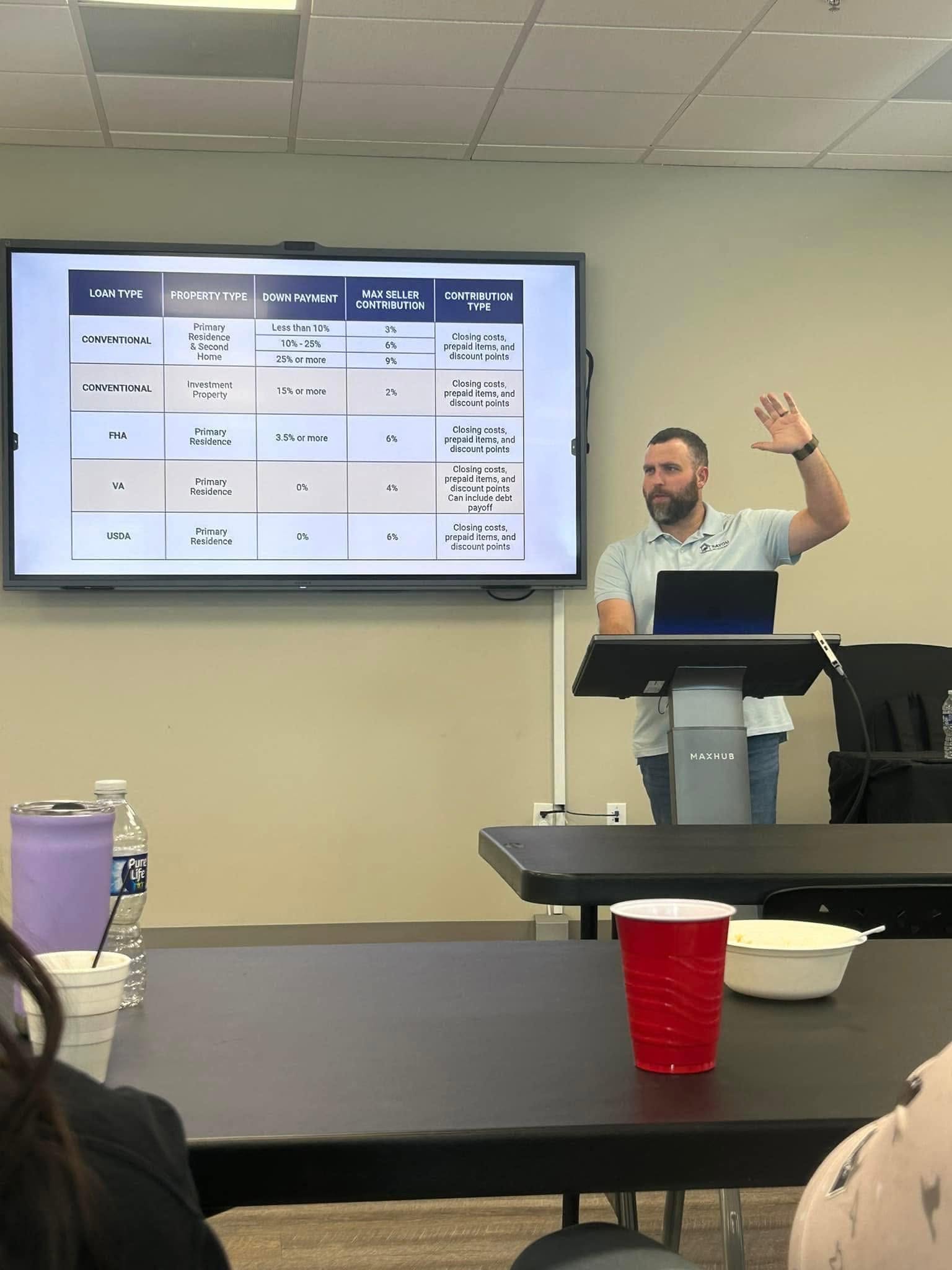
Yes, but less than on government loans. With under 10% down on a home you'll live in, the seller can only cover up to 3% of the price, which often isn't enough to cover all your closing costs. FHA and USDA allow 6% and VA allows 4%.
For 2026 the conforming limit in Calcasieu Parish is $832,750 for a single family home. Borrowing more than that takes a jumbo loan. Two to four unit properties have higher limits.
Yes, with a two year history. Your income is averaged from your tax returns, so six months of self employment usually isn't enough. If your tax returns don't show enough income, ask about bank statement loans.
Conventional isn’t the right fit for everyone. These are the loans buyers most often compare it with.
3.5% down with a 580 score. Often the better fit when your score is under the high 600s.
Learn More BuyEvery program that can get you into your first home, compared side by side.
Learn More BuyFor loan amounts above the $832,750 conforming limit.
Learn More Buy$0 down and no monthly mortgage insurance for veterans and service members.
Learn More Buy$0 down for homes in eligible towns and suburbs.
Learn More RefinanceTap your home’s equity to consolidate debt, fund renovations, or cover big expenses.
Learn MoreFifteen minutes gets you a real number instead of a guess, and the soft credit check costs your score nothing.