“I need 20% down to buy a house.”
You May Need Nothing Down
VA and USDA have no down payment, assistance programs can cover it, and FHA only needs 3.5%. With decent credit, you may not need a down payment at all.
It takes less to become a homeowner than most people think. The down payment is the biggest hurdle, and between FHA, VA, USDA, and down payment assistance, there are more ways around it than you’ve been told.
First time home buyer loans are mortgage programs that help people buy their first home with little or nothing down. They include FHA, VA, USDA, and low down payment conventional loans, often paired with down payment assistance. For most programs, you count as a first time buyer if you haven't owned a home in three years.
There isn't one single first time buyer loan. Instead, there are loans and programs built with first time buyers in mind: FHA with 3.5% down, VA and USDA with nothing down, conventional loans with 3% down, and down payment assistance that can cover part or all of what you need at closing.
First time buyer doesn't always mean you've never owned a home. For most programs, if you haven't owned a home in the past three years, you count. Some programs also require a short homebuyer education course before closing, which you can usually take online.
You should look at first time buyer options as soon as you start thinking about buying, before you look at homes. Knowing which loan fits you tells you how much you need saved, what your payment will be, and what price range makes sense.
These programs make the most sense when you have steady income but not a big pile of savings. Most buyers don't need 20% down, and between low down payment loans, seller help with closing costs, and assistance programs, many buyers in Lake Charles move in with far less than they expected.
The trade off is that the lowest down payment isn't always the lowest cost. Some assistance comes with a slightly higher rate or a second loan you repay when you sell. The right move is to compare your options side by side, then pick the one that fits your budget and how long you plan to stay.
I break down the three things that decide whether you can buy: your down payment, your credit, and your income. It’s probably less than you think.
“I need 20% down to buy a house.”
VA and USDA have no down payment, assistance programs can cover it, and FHA only needs 3.5%. With decent credit, you may not need a down payment at all.
“I owned a house years ago, so I’m not a first time buyer.”
For conventional loans, if you haven’t owned a home in the last three years, you count as a first time buyer again.
“Down payment assistance is free money.”
Assistance can get you in sooner, but it comes with a cost somewhere. I’ll show you the tradeoff so you can decide whether to use it now or save a little more first.
Every first time buyer comes down to the same three pieces. Get these right and the loan program follows.
The biggest hurdle for most buyers. VA, USDA, and assistance programs can take it to $0, and FHA keeps it at 3.5%.
580 gets you into FHA. Around 640 opens most assistance programs. No late payments in the last 12 months matters as much as the number.
Lenders can generally use up to about half your gross monthly income for your debts and house payment combined. That number decides how much house you can afford.
Most first time buyers use one of these. We run them side by side with your real numbers.
3.5% down with a 580 score. The most popular first time buyer loan, and most assistance programs pair with it.
Learn More Buy$0 down and no monthly mortgage insurance for veterans and active duty service members.
Learn More Buy$0 down for homes in eligible towns and suburbs outside the bigger cities.
Learn More BuyAs little as 3% down for first time buyers with stronger credit. PMI cancels at 20% equity.
Learn More BuyHelp covering your down payment, usually paired with an FHA loan and a 620 to 640 score.
Learn More LearnA live class on Zoom on Tuesdays that walks you through how buying actually works.
Learn MoreHandle these before you start touring homes.
Start with what you can afford each month, not the price of the house. Your debt to income ratio is the number that sets your budget.
A 640 score opens up most assistance programs and zero down options. Pay every bill on time for 12 months and it gets a lot easier.
Every dollar of car and card payments is a dollar that can’t go toward your house. Lowering them raises what you qualify for.
Using assistance now and waiting to save more both have a cost. Look at both before you decide.
Here’s exactly what happens after you reach out.
Tell us the price range you’re shopping, your credit range, and how much you have saved. We start with a soft credit check, so your score isn’t touched.
Start My Pre-ApprovalSend your pay stubs, W2s, and bank statements. We compare your loan options side by side and send a letter with your max price to hand your Realtor.
Start My Pre-ApprovalOnce you’re under contract, we order the appraisal, work with title, and take your file through underwriting to closing day.
Start My Pre-Approval

First time home buyer loans are mortgage programs that help people buy their first home with little or nothing down. They include FHA, VA, USDA, and low down payment conventional loans, often paired with down payment assistance. For most programs, you count as a first time buyer if you haven't owned a home in three years.
For conventional loans, you count as a first time buyer if you haven't owned a home in the last three years. Some down payment assistance programs use stricter rules, so we check the exact rule for any program you're looking at.
Possibly nothing. VA and USDA loans have no down payment, and down payment assistance can cover it on other loans. Otherwise FHA needs 3.5% and conventional can go as low as 3%. The down payment is the biggest hurdle for most buyers, and there are more ways around it than people think.
FHA allows 3.5% down with a 580 score. Most down payment assistance programs want a 620 to 640 score, so getting to about 640 opens up the most options. Your history matters too. Late payments in the last 12 months can hurt more than a lower score.
Yes. There's the Louisiana Housing Corporation, programs run by individual parishes and cities, and grant and assistance programs we have through our lenders. Most of them pair with an FHA loan, where the assistance goes toward your down payment.
There's always a tradeoff. Depending on the program it can mean a slightly higher rate, a second loan that's repaid later, or extra requirements. Part of what I do is show you the tradeoff so you can decide whether to use the program now or save a little more first.
There's no set minimum, but your debt to income ratio decides how much house you can afford. Lenders can generally use up to about half of your gross monthly income for your debts and house payment combined. On $3,000 a month, that's about $1,500, and if $500 already goes to a car note and credit cards, about $1,000 is left for the house.
Often yes. FHA is flexible with collections. Medical collections and charged off accounts aren't counted, and other collections over $2,000 usually just add a small amount to your debt to income ratio instead of having to be paid off.
It comes down to affordability. Rent builds no equity. When you own, every payment pays down your balance, which works like a forced savings plan. If what you pay in rent is close to what you'd pay to own, owning usually makes more sense.
Traditional financing gets hard on a very low income because of debt to income limits. The USDA Direct loan, offered straight through USDA, is built for low income buyers and comes with a subsidized rate. We don't originate it, but we'll point you in the right direction.
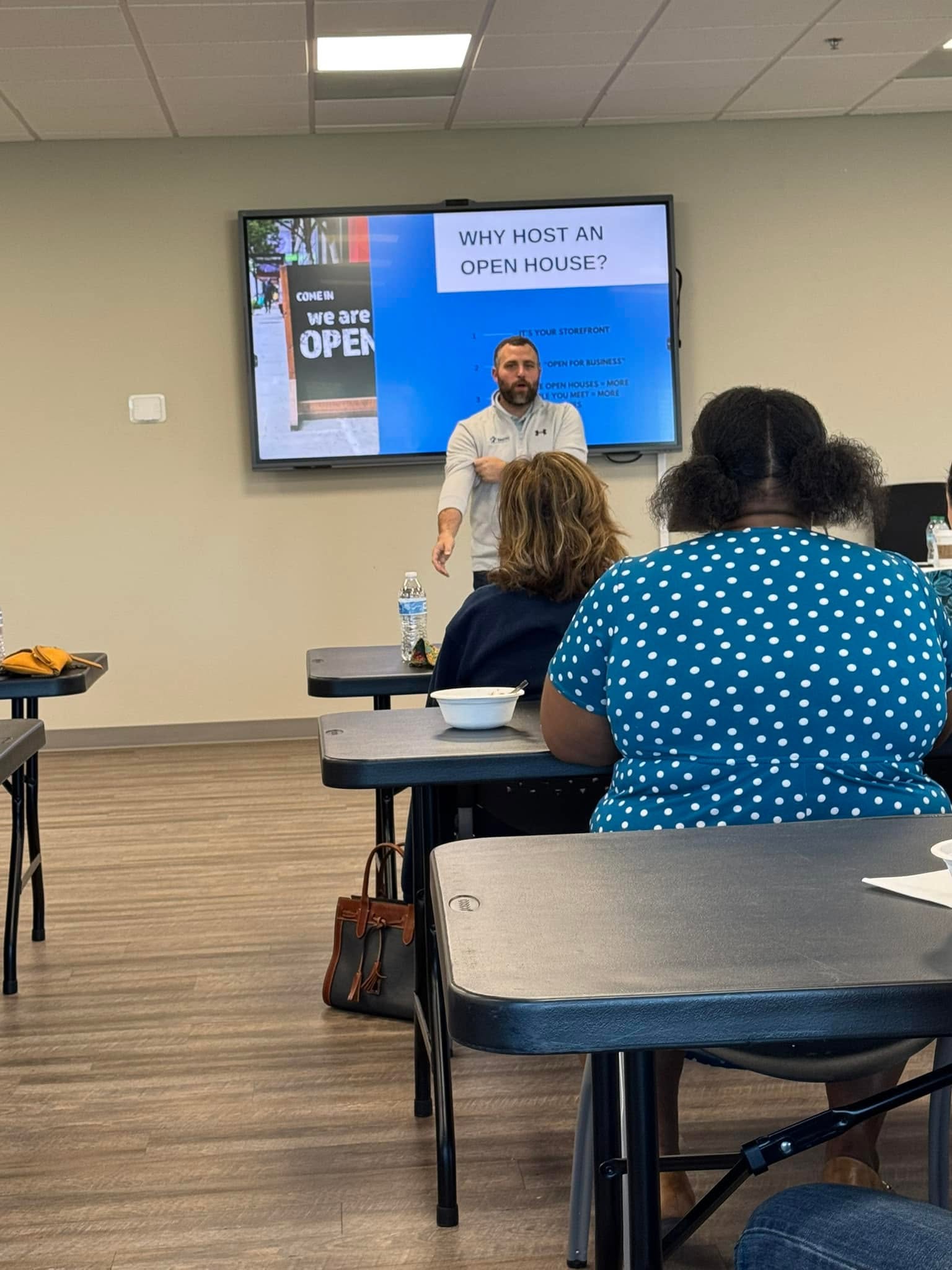
Yes. I teach a free live class on Zoom on Tuesdays that walks you through how buying actually works, so you know your numbers before you start looking.
Fifteen minutes gets you a real number instead of a guess, and the soft credit check costs your score nothing.