“I can only use my VA loan once.”
Your Benefit Is Reusable
I talk to veterans all the time who didn’t know this. Sell the home and pay off the loan and your entitlement restores, and you can even hold two VA loans at once.

Your service earned you the best mortgage in America, and you don’t need a down payment or perfect credit to use it. I’ll show you what your VA benefit actually gets you, side by side with your other options.
A VA loan is a home loan guaranteed by the U.S. Department of Veterans Affairs for eligible veterans, active duty service members, Guard and Reserve members, and some surviving spouses. It allows $0 down with no monthly mortgage insurance. Most borrowers pay a one time funding fee unless they're exempt.
Like FHA, the VA doesn't lend the money. It guarantees part of the loan, which is why lenders can offer $0 down with no monthly mortgage insurance. To use it, you need a Certificate of Eligibility, which shows your entitlement based on your service. We can usually pull it for you in minutes.
Instead of monthly mortgage insurance, most borrowers pay a one time VA funding fee, which can be rolled into the loan. Veterans who receive VA disability compensation are exempt. VA loans are for the home you'll live in, and with full entitlement there's no VA loan limit on how much you can borrow.
If you're eligible, a VA loan should be the first loan you look at. Zero down and no monthly mortgage insurance is a combination no other loan offers, and VA rates are often lower than conventional rates for the same borrower.
It's especially strong if you're exempt from the funding fee because of a service connected disability, since that removes the biggest cost of the loan. VA is also flexible on credit and looks at residual income, the money left over each month after your bills, rather than relying only on a strict debt ratio.
The main times to compare it against something else are when you're putting 20% or more down and paying the funding fee, or when you're buying a home you won't live in. VA is for your primary residence, so a rental or vacation home needs a different loan. You can use your benefit again and again, so using it now doesn't take it away for good.
I walk through eligibility, entitlement, the funding fee, seller concessions, residual income, and the myths that trip veterans up.
“I can only use my VA loan once.”
I talk to veterans all the time who didn’t know this. Sell the home and pay off the loan and your entitlement restores, and you can even hold two VA loans at once.
“The funding fee makes VA expensive.”
A service connected disability rating, even 10%, waives the funding fee. For everyone else it rolls into the loan, and there is still no monthly mortgage insurance.
“My COE says $36,000, so that’s all I can borrow.”
$36,000 is what full entitlement looks like on a Certificate of Eligibility. It’s the VA’s guarantee to your lender. I’ve had a veteran come to me after another lender told him that was all he qualified for. With full entitlement you can borrow whatever you can afford.
If you’re eligible, VA is hard to beat. It still isn’t the answer every time, so we compare it with your real numbers before you choose.
The VA sets the program rules, and each lender can add its own on top. If one lender says no, another may say yes.
A Certificate of Eligibility: 90 days of active duty in wartime or 181 in peacetime, or 6 years in the Guard or Reserve (or 90 days under Title 10 orders). We pull it for you. First timers may need a DD214, and it usually comes back in about a day.
The VA sets no minimum. Most lenders start at 580 to 620, and as a broker I have lenders that go lower. The bigger factor is no late payments in the last 12 months.
VA leans on residual income: what’s left each month after your debts, your new house payment, and estimated utilities. If you have enough left over for your area and family size, VA is very flexible.
Your primary residence, moved into within 60 days and lived in for 12 months, with exceptions if you’re deployed. One to four units are allowed if you live in one. It must pass a VA appraisal.
2.15% the first time with less than 5% down, 3.3% after that. 1.5% with 5% down and 1.25% with 10% down. Waived with a service connected disability rating.
Full entitlement means no VA loan limit. If you already have a VA loan open, we work out how much entitlement you have left.
The same house can cost very different amounts each month depending on the loan. This is how they line up.
| VA | FHA | Conventional | |
|---|---|---|---|
| Minimum Down Payment | $0 | 3.5% | 3% |
| Minimum Credit Score | Set by the lender | 580 for 3.5% down | 620 |
| Monthly Mortgage Insurance | None | Yes, for the life of the loan with under 10% down | PMI until 20% equity |
| Upfront Fee | Funding fee, 2.15% first use with $0 down, waived with disability compensation | 1.75% upfront premium | None |
| 2026 Loan Limit, Calcasieu Parish | None with full entitlement | $541,287 | $832,750 |
| Seller Help | Closing costs plus up to 4% in concessions | Up to 6% | Depends on down payment |
My take: don’t pick a loan by its name. Pick it by the payment and what it costs you over the years you’ll actually own the home. I’ll put the options in front of you and shop them across multiple lenders.
Handle these before you start touring homes.
We can usually pull your COE online in minutes. Knowing your entitlement up front tells you exactly what you can buy with $0 down.
If you receive VA disability compensation, the funding fee is waived. Your award letter helps confirm it so the fee never lands on your closing numbers.
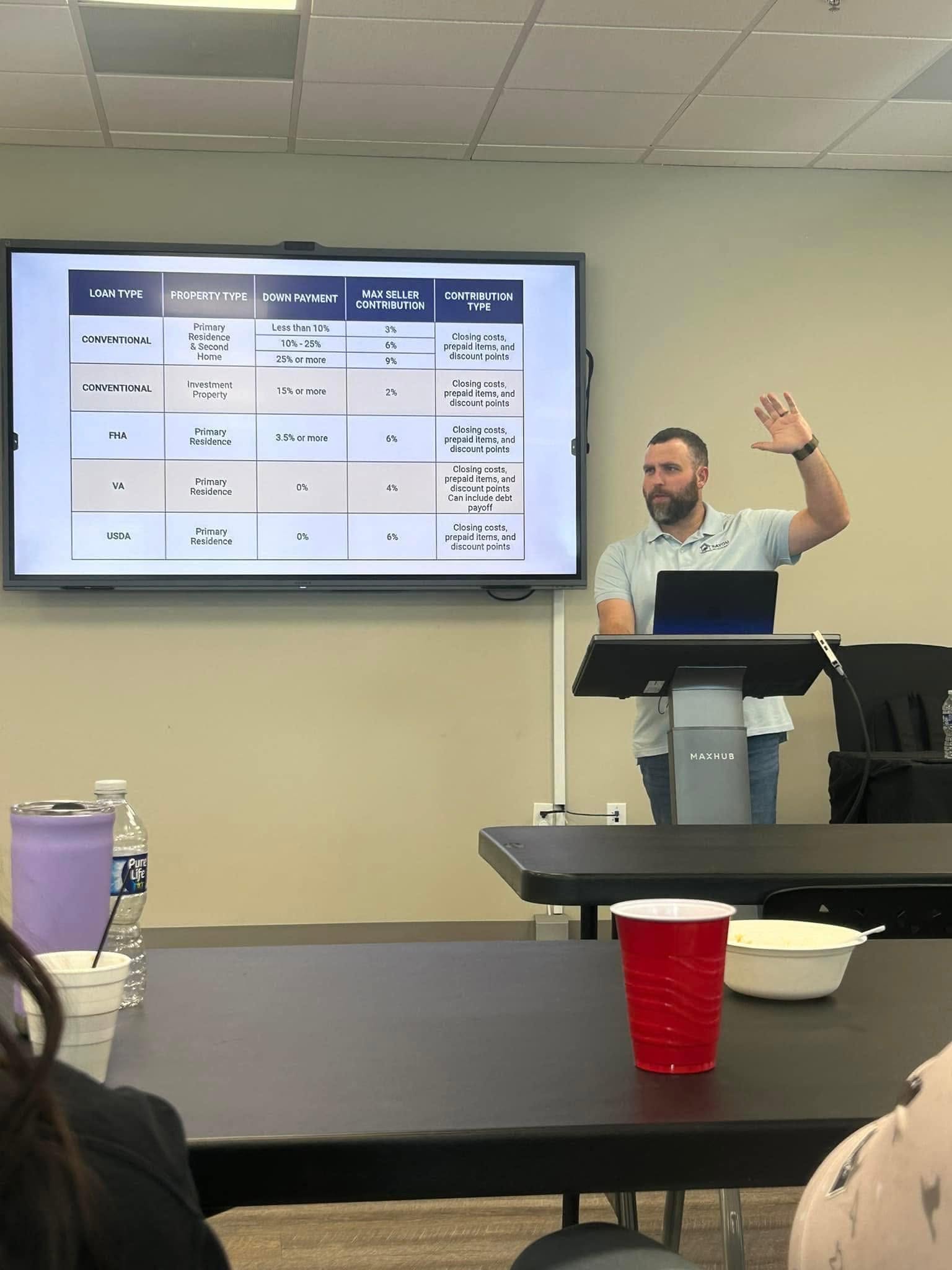
VA lets the seller pay your closing costs, funding fee, and prepaids, plus up to 4% more. That 4% can even pay off your debts, which no other program allows. With the right deal, it’s possible to buy with $1,000 or less out of pocket.
The VA appraisal checks condition, not just value: safe, sound, and sanitary. Chipped paint, broken windows, exposed wiring, or no stove get called out, and VA is strict about termites. Spot them early.
Here’s exactly what happens after you reach out.
Tell us the price range you’re shopping, your credit range, and how much you have saved. We start with a soft credit check, so your score isn’t touched.
Start My Pre-ApprovalSend your pay stubs, W2s, and bank statements. We compare your loan options side by side and send a letter with your max price to hand your Realtor.
Start My Pre-ApprovalOnce you’re under contract, we order the appraisal, work with title, and take your file through underwriting to closing day.
Start My Pre-Approval





A VA loan is a home loan guaranteed by the U.S. Department of Veterans Affairs for eligible veterans, active duty service members, Guard and Reserve members, and some surviving spouses. It allows $0 down with no monthly mortgage insurance. Most borrowers pay a one time funding fee unless they're exempt.
The VA doesn't set a minimum credit score. Most lenders start at 580 to 620, and some online lenders with military in their name want 620 to 640. As a broker I have lenders that go lower, and I've closed VA loans with scores of 500 and 550. The biggest factor is no late payments in the last 12 months.
No down payment is required with full entitlement. Putting 5% or 10% down lowers the funding fee, but if you're planning to put money down, nine times out of ten you're better off with a conventional loan. The $0 down is the point of the VA loan.
On a purchase with less than 5% down it is 2.15% of the loan the first time you use the benefit and 3.3% after that. With 5% down it drops to 1.5%, and with 10% or more down it is 1.25%. It rolls into the loan instead of coming out of your pocket.
Veterans with a service connected disability rating, even 10%, are exempt, as are surviving spouses receiving Dependency and Indemnity Compensation and active duty service members who received a Purple Heart. The exemption shows on your Certificate of Eligibility.
Not with full entitlement. The amount on your Certificate of Eligibility is the VA's guarantee to your lender, not a cap on what you can borrow. If part of your entitlement is tied up in another VA loan, limits can apply and a larger purchase may need some money down.
Yes. Sell the home and pay off the loan and your entitlement restores. You can also hold two VA loans at once using your bonus entitlement, as long as each was your primary residence when you bought it and you lived in the first one for 12 months.
Yes. Sellers can pay your closing costs, funding fee, and prepaid taxes, plus up to 4% of the price in concessions. That 4% can even pay off your debts, which no other loan program allows. Have your Realtor ask for it in your offer.
Yes, up to four units, as long as you live in one of them for at least 12 months. The rent from the other units can help you build wealth. VA can't be used for a pure investment or a vacation home.
Be careful. A buyer can take over your VA loan and your rate, which can help you sell. But your entitlement doesn't restore until they pay it off or sell, so if you'll want another VA loan, an assumption can leave you stuck on bonus entitlement for a long time.
Often yes. The standard wait is 2 years after a Chapter 7 discharge and 2 years after a foreclosure. A Chapter 13 can qualify after 12 months of on time plan payments with the trustee's approval.
Yes, two ways. The VA IRRRL lowers your rate fast with a 0.5% funding fee, minimal paperwork, and often no appraisal or income verification. A VA cash out refinance lets you take equity out, up to 100% in many cases, though some lenders cap it at 90%.
VA isn’t the right fit for everyone. These are the loans buyers most often compare it with.
The fastest, simplest way to lower the rate on your VA loan.
Learn More Buy3.5% down with a 580 score. Built for buyers who need flexible credit and income rules.
Learn More BuyBest long term value for 680+ credit. PMI cancels at 20% equity, unlike FHA.
Learn More Buy$0 down for homes in eligible towns and suburbs, with lower mortgage insurance than FHA.
Learn More RefinanceTap your home’s equity to consolidate debt, fund renovations, or cover big expenses.
Learn More BuyEvery program that can get you into your first home, compared side by side.
Learn MoreFifteen minutes gets you a real number instead of a guess, and the soft credit check costs your score nothing.