
2025 Conventional Loan Limits:
$806,500 and Beyond
Conforming loan limits define the boundary between standard conventional pricing and jumbo territory. Knowing where the line falls, and what happens when you cross it, directly affects your rate and qualification.
The Basics
Understanding Conforming Loan Limits
Every year, the Federal Housing Finance Agency (FHFA) sets the maximum loan amount that Fannie Mae and Freddie Mac can purchase from lenders. This ceiling is called the conforming loan limit, and it determines whether your mortgage qualifies for standard conventional pricing or requires a jumbo loan. For 2025, the standard limit for a single-family home is $806,500, up from $766,550 in 2024.
The limit matters because loans within the conforming boundary get sold to Fannie Mae or Freddie Mac, which creates liquidity in the mortgage market and keeps rates competitive. Loans above the limit cannot be sold to these agencies, forcing lenders to hold them on their own books, which typically means stricter qualification standards and higher interest rates. For a deeper overview of how this fits into the broader conventional landscape, see our conforming loan guide.
2025 Limits
Standard Conforming Limits by Property Type
The conforming limit scales with the number of units in the property. Conventional loans allow financing for 1-to-4 unit properties (with owner-occupancy requirements for multi-unit), and each unit count has its own ceiling. These limits apply to most areas of the country, the baseline floor that FHFA sets nationally.
| Property Type | 2025 Standard Limit | 2024 Limit (Prior Year) |
|---|---|---|
| 1-Unit | $806,500 | $766,550 |
| 2-Unit | $1,032,650 | $981,500 |
| 3-Unit | $1,248,150 | $1,186,350 |
| 4-Unit | $1,551,250 | $1,474,400 |
Limit applies to loan amount, not purchase price
A common misconception: the conforming limit caps your loan amount, not the home's price. If you purchase a $900,000 home and put 15% down ($135,000), your loan amount is $765,000, well within the $806,500 limit. A larger down payment can keep you in conforming territory even on higher-priced properties.
High-Cost Areas
High-Cost Area Limits: Up to $1,209,750
In areas where median home prices exceed the standard conforming limit, FHFA allows higher ceilings, up to 150% of the baseline. For 2025, that means the high-cost ceiling for a single-family home is $1,209,750. These elevated limits are county-specific, with FHFA publishing the exact number for each county based on local median home values.
Loans between the standard limit ($806,500) and the high-cost ceiling ($1,209,750) are sometimes called high-balance conforming loans or super-conforming loans. They carry slightly higher rates than standard conforming, typically 0.125% to 0.250% more, but significantly better terms than true jumbo loans because they're still backed by Fannie Mae or Freddie Mac.
High-Balance Conforming Benefits
- Still sold to Fannie/FreddieAgency backing means competitive rates and standardized underwriting guidelines.
- Lower requirements than jumboStandard conventional credit minimums apply (620+). Jumbo typically requires 720+. See credit score tiers
- Lower down payment possibleHigh-balance conforming allows up to 95% LTV in some cases. Jumbo usually caps at 80%.
High-Balance Trade-Offs
- Slightly higher rateExpect 0.125% to 0.250% rate premium over standard conforming. Still well below jumbo rates.
- Additional LLPAs may applyFannie Mae charges an extra LLPA of 0.250% for high-balance loans, on top of standard score/LTV adjustments.
- Not available everywhereOnly in counties designated as high-cost by FHFA. Standard-cost counties cap at $806,500 regardless.
Want To Know What This Looks Like On Your Numbers?
Every scenario is different. A soft credit check tells you where you actually stand, and nothing hits your report until you decide to move forward.
Multi-Unit
Multi-Unit Conforming Limits: 2025 Complete Table
Multi-unit properties (2 to 4 units) have proportionally higher conforming limits because the purchase prices are naturally higher. Conventional allows financing up to 4 units as long as the borrower occupies one unit as a primary residence. This is a popular strategy for house-hacking, living in one unit while renting the others to offset mortgage costs.
2025 Multi-Unit Conforming Limits
Standard vs. High-Cost by Unit Count
| Units | Standard Area | High-Cost Ceiling |
|---|---|---|
| 1-Unit | $806,500 | $1,209,750 |
| 2-Unit | $1,032,650 | $1,548,975 |
| 3-Unit | $1,248,150 | $1,872,225 |
| 4-Unit | $1,551,250 | $2,326,875 |
Source: FHFA 2025 conforming loan limits. High-cost ceiling = 150% of standard. NEXA Lending · NMLS #1660690.
Background
The Role of Fannie Mae & Freddie Mac
Fannie Mae (Federal National Mortgage Association) and Freddie Mac (Federal Home Loan Mortgage Corporation) are government-sponsored enterprises that buy mortgages from lenders, package them into mortgage-backed securities, and sell them to investors. This secondary market is what keeps mortgage rates lower than they'd be if each lender had to hold every loan on its own balance sheet.
The conforming limit exists because of this structure. Fannie and Freddie can only purchase loans that meet their guidelines, including the maximum loan amount. When a loan exceeds the limit, it can't be sold to these agencies, which fundamentally changes the economics for the lender. This is why jumbo loans behave differently: the lender retains the risk, so they demand higher credit scores, larger reserves, and charge higher rates to compensate.
How limits are adjusted annually
FHFA adjusts the conforming limit each year based on changes in the national average home price. When home prices rise, the limit increases to keep pace. The 2025 increase to $806,500 reflects a 5.2% rise from 2024's $766,550. FHFA uses Q3 home price data from its own House Price Index to calculate the adjustment, with new limits announced in late November and taking effect January 1.
Beyond Conforming
What Happens When Your Loan Exceeds the Limit
Once your loan amount exceeds the applicable conforming limit for your area (standard or high-cost), you're in jumbo loan territory. Jumbo mortgages are not backed by Fannie Mae or Freddie Mac, which means the lender takes on more risk, and passes that risk along to you in the form of tighter requirements and different pricing.
Jumbo vs. Conforming: Key Differences
- Higher credit score minimumMost jumbo lenders require 720+ (compared to 620 for conforming). Some require 740+. See jumbo requirements
- Larger down paymentJumbo typically requires 20%+ down. Conforming allows as low as 3%. Compare down payment options
- Higher reserves requiredExpect 6 to 12 months of reserves post-closing. Conforming rarely requires reserves on primary residences.
- Rate premiumJumbo rates are typically 0.25% to 0.50% higher than conforming, though the gap narrows in competitive markets.
Strategies to Stay Under the Limit
- Increase your down paymentThe limit applies to loan amount, not purchase price. A larger down payment can keep you under the conforming ceiling.
- Check high-cost area statusYour county may have a higher limit than the standard $806,500. FHFA publishes county-specific limits annually.
- Consider a piggyback structureAn 80/10/10 keeps the first mortgage under the conforming limit while a second mortgage covers the gap. See piggyback strategy
Want To Know What This Looks Like On Your Numbers?
Every scenario is different. A soft credit check tells you where you actually stand, and nothing hits your report until you decide to move forward.
Not Sure If Your Loan Amount Is Conforming?
Mortgages by Channing checks your county's specific limit and structures your loan to get the best available pricing, conforming, high-balance, or jumbo.
Common Questions
Loan Limits FAQ
Answers about conforming loan limits, high-cost areas, and exceeding the ceiling.
Get Your County's Exact Limit
Mortgages by Channing checks your specific county and structures your loan for the best available pricing tier.
The Application
Apply From Your Phone In Fifteen Minutes
The whole application runs on your phone. Snap photos of your documents, connect your bank, and you're done. It reaches me the minute you submit it.
- Starts with a soft credit check, so your score is never touched
- We run conventional next to FHA so you see both payments
- Upload documents with your phone camera, no scanner needed
- You hear back from Channing, not from a call center queue
If the numbers say wait, I'll tell you that too, and then we make a plan to fix whatever is in the way.
Complete Your Application
Five short steps. Most people finish in about fifteen minutes.
- Tell us what you're looking for
- We check your conventional numbers
- Upload your documents
Your pre-approval letter is ready. I sent it to your email and to your agent.
Got your application. I'm reviewing it now and will call you this afternoon.
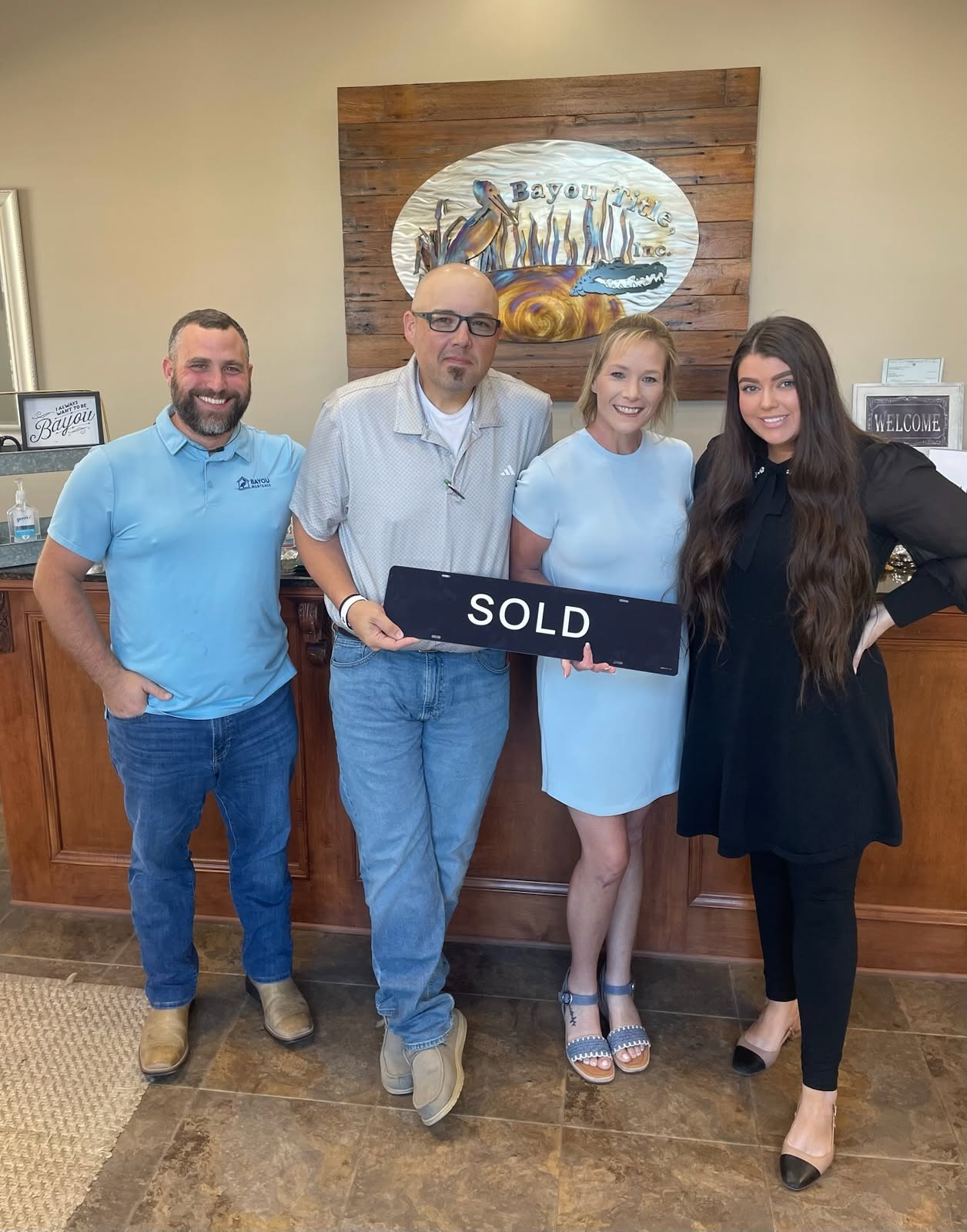
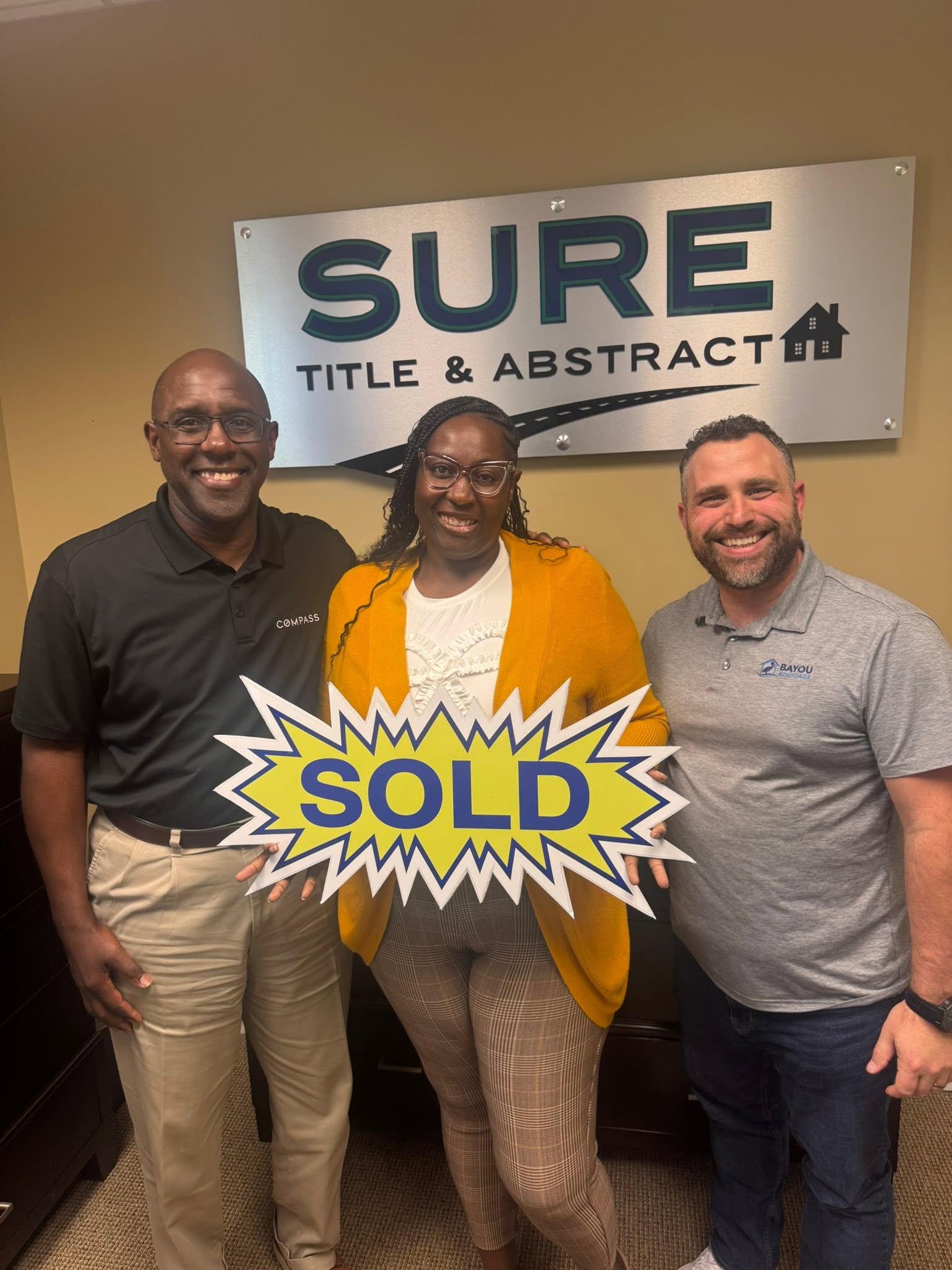
Real Closings
Real Clients.
Real Closings.
Real families we have helped get from pre-approval to keys in hand.


Find Out Where You
Actually Stand
A soft credit check tells you what you qualify for before anyone pulls hard credit. If the numbers say wait, I will tell you that too, and then we make a plan to fix whatever is in the way.
See What I Qualify ForMortgages by Channing · 337-476-2623 · Licensed across Louisiana · NMLS #1660690