
Conventional vs. USDA Loan:
Which Saves You More?
USDA offers zero down payment, but only in eligible rural and suburban areas with household income limits. Conventional has no location restriction and no income cap. Here's how to decide.
The Core Difference
USDA's Zero Down vs. Conventional's Flexibility
USDA's headline feature is zero down payment, no other conventional or government program matches this except VA. That alone makes USDA incredibly attractive for eligible buyers. The catch: your property must be in a USDA-eligible area (rural or suburban, outside major metropolitan zones), and your household income cannot exceed 115% of the area median income.
Conventional has none of these restrictions. You can buy anywhere, earn any amount, and choose from single-family homes to multi-unit properties to investment rentals. The trade-off is that conventional requires a down payment, typically 3-5% for primary residences, and PMI if you put less than 20% down. For buyers who qualify for both, the decision comes down to cash on hand, location, and long-term cost.
USDA Wins When You Have...
- Limited savings for down paymentZero down means $0 out of pocket beyond closing costs (which can also be financed).
- Property in an eligible areaMany suburban neighborhoods qualify, more areas than most buyers expect.
- Household income under 115% AMIAll household members' income counts, not just the borrower's.
- Moderate credit (640+)USDA rates are competitive and guarantee fees are typically lower than PMI at similar scores.
Conventional Wins When You Have...
- Property in a non-eligible areaUSDA doesn't work in metro areas. Conventional works everywhere.
- Income above USDA limitsNo income cap on conventional loans.
- 20% down payment availableEliminates PMI entirely. USDA guarantee fee has no elimination path.
- Investment property or second homeUSDA is primary residence only. See investment property options
Side by Side
Conventional vs. USDA: Full Comparison
Every major factor compared. The highlighted column is USDA.
| Factor | USDA Loan | Conventional Loan |
|---|---|---|
| Down Payment | 0% | 3 to 5% (primary) · 15 to 25% (investment) |
| Location Restriction | USDA-eligible areas only | None, buy anywhere |
| Income Limit | 115% of area median income | None (80% AMI for 3% down programs only) |
| Minimum Credit Score | 640 (most lenders) | 620 |
| Upfront Fee | 1.0% guarantee fee (rolled in) | None |
| Annual Fee | 0.35% annual guarantee fee | PMI: 0.2% to 2% (varies by score/LTV) |
| Fee Duration | Life of loan | PMI cancels at 20% equity |
| Property Types | Single-family primary residence only | 1-4 units, investment, second home |
| Max DTI | 41% standard (flexible with comp. factors) | 45 to 50% |
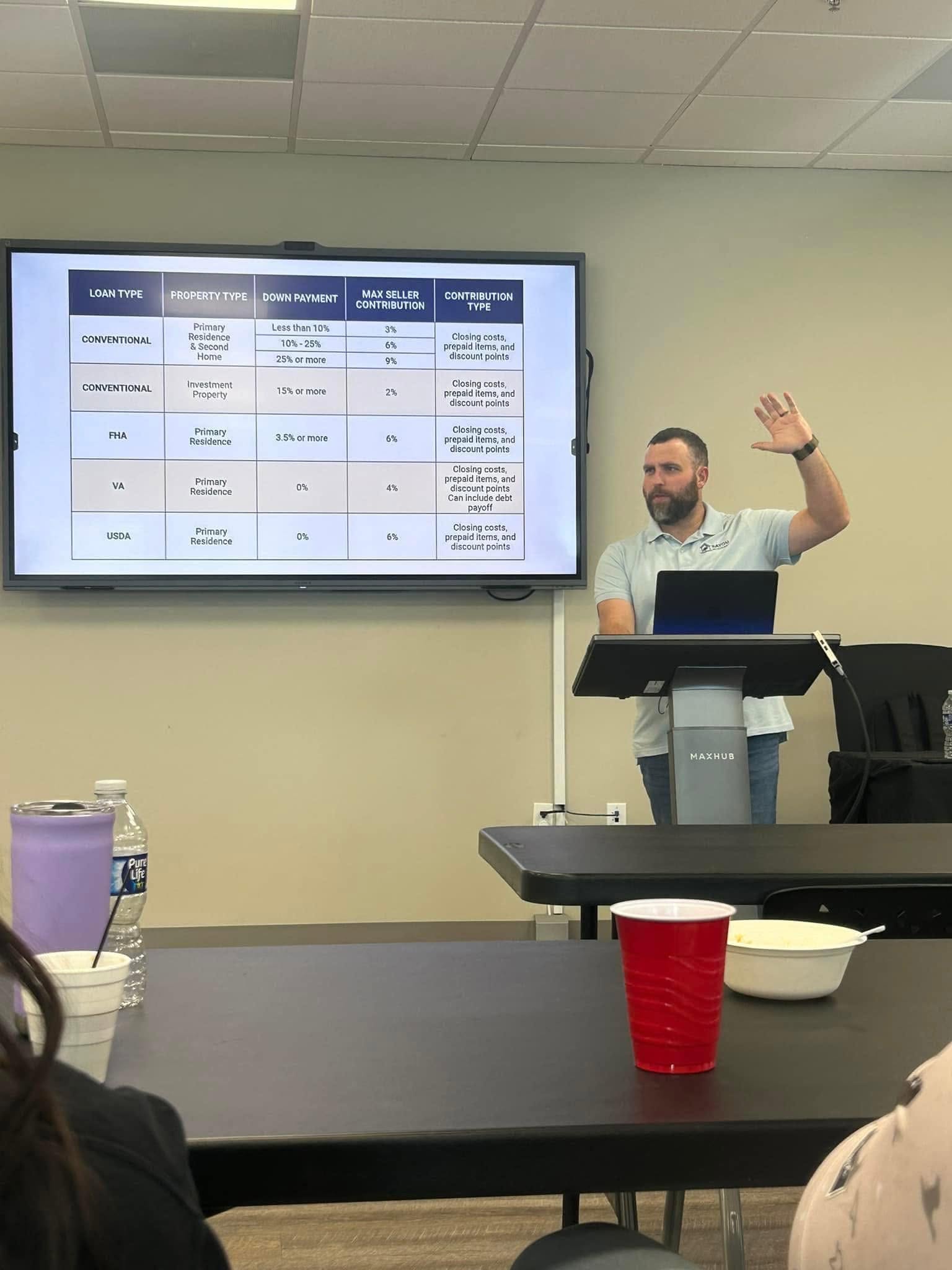
| Seller Concessions | Up to 6% | 3 to 6% (varies by LTV) |
| Loan Limits | No set limit (based on repayment ability) | $806,500 conforming limit |
| Occupancy | Primary residence only | Primary, second home, investment |
The Gatekeepers
USDA Eligibility: Location and Income
USDA eligibility comes down to two factors that conventional doesn't have: where the property is located and how much your household earns. Both must be met simultaneously, qualifying on one but not the other disqualifies you from the program.
Location Eligibility
USDA maintains a map of eligible areas that includes most of the country outside major metropolitan centers. Many buyers are surprised to learn that suburban neighborhoods, smaller towns, and areas just outside metro boundaries often qualify. The map is updated periodically, so properties that were ineligible a few years ago may be eligible now (and vice versa).
The only way to confirm eligibility is to check the specific property address on USDA's online eligibility map. Your loan officer at Mortgages by Channing can run this check instantly.
Income Eligibility
USDA measures total household income, not just the borrower's income, but the income of every adult living in the household. This is different from conventional, which only counts income for borrowers on the loan. A household where only one person is on the mortgage but two people earn income could exceed the limit even if the borrower's individual income qualifies.
The cap is 115% of the area median income for the county where the property is located. Deductions for childcare, elderly household members, and dependents can reduce the calculation.
Conventional has no location or income restrictions
If the property you want is outside USDA-eligible areas or your household income exceeds the limit, conventional is the default alternative. With 3% down programs available for moderate-income buyers and standard 5% down for everyone else, conventional provides a clear path when USDA eligibility doesn't work out.
Want To Know What This Looks Like On Your Numbers?
Every scenario is different. A soft credit check tells you where you actually stand, and nothing hits your report until you decide to move forward.
Mortgage Insurance
USDA Guarantee Fee vs. Conventional PMI
Both loans carry mortgage insurance, USDA calls theirs a guarantee fee, conventional calls it private mortgage insurance (PMI). The structures are different, and the long-term cost comparison matters significantly.
30-Year Cost Comparison
$250,000 Purchase · 680 Credit Score
How total mortgage insurance costs compare over the life of each loan.
| Factor | USDA | Conventional (5% down) |
|---|---|---|
| Upfront Fee | $2,500 (1.0%, rolled into loan) | $0 |
| Annual Fee/PMI | ~$875/yr (0.35%) | ~$1,425/yr (~0.60% at 680) |
| Fee Duration | Life of loan | Cancels ~year 8-9 |
| Total Over 30 Years | ~$28,000 | ~$13,000 (PMI portion only) |
Illustrative example. Assumes 3% annual appreciation. Actual costs vary. NEXA Lending · NMLS #1660690.
USDA's annual guarantee fee (0.35%) is lower than most conventional PMI rates, which makes the monthly payment lower in the early years. But USDA's guarantee fee never goes away, while conventional PMI cancels at 20% equity. Over the full 30-year term, conventional's total mortgage insurance cost is typically lower for borrowers who stay in the home long enough to hit that 20% equity mark.
Real Scenarios
Which Loan Wins for Your Situation
The right loan depends on your specific circumstances, location, savings, income, and timeline.
No savings, eligible area, moderate income
Zero down with USDA eliminates the biggest barrier to homeownership. Guarantee fee is lower than PMI monthly. Location qualifies. Household income is within limits. USDA is the clear winner, there's no reason to put 3-5% down if you don't have to.
20% down payment available, strong credit
With 20% down, conventional eliminates PMI entirely. USDA's guarantee fee would still apply (it never cancels). No mortgage insurance of any kind beats a low guarantee fee. Conventional wins decisively when you have the cash.
Property in a metro area, limited savings
USDA is not available in metro areas. Conventional at 3-5% down is the path, or FHA at 3.5% if credit is below 680. Location alone eliminates USDA from the conversation regardless of income or savings. See 3% down programs
Household income over 115% AMI, eligible area
Income disqualifies USDA even though the location works. Conventional has no income limit (except for 3% down programs which cap at 80% AMI). Standard 5% down conventional is the straightforward alternative. See conventional requirements
Eligible area, qualifies for both, planning to stay 15+ years
This is the close call. USDA's zero down saves cash upfront and monthly guarantee fee is lower initially. But over 15+ years, conventional PMI cancels while USDA's fee continues. Run both scenarios with actual rate quotes, the answer depends on your specific rate, score, and appreciation assumptions.
Common Questions
Conventional vs USDA FAQ
Questions about choosing between conventional and USDA financing.
Not Sure Which Loan Fits?
Mortgages by Channing does both USDA and conventional loans. Give us the property address and we'll check USDA eligibility, run both scenarios, and show you the real numbers.
The Application
Apply From Your Phone In Fifteen Minutes
The whole application runs on your phone. Snap photos of your documents, connect your bank, and you're done. It reaches me the minute you submit it.
- Starts with a soft credit check, so your score is never touched
- We run conventional next to FHA so you see both payments
- Upload documents with your phone camera, no scanner needed
- You hear back from Channing, not from a call center queue
If the numbers say wait, I'll tell you that too, and then we make a plan to fix whatever is in the way.
Complete Your Application
Five short steps. Most people finish in about fifteen minutes.
- Tell us what you're looking for
- We check your conventional numbers
- Upload your documents
Your pre-approval letter is ready. I sent it to your email and to your agent.
Got your application. I'm reviewing it now and will call you this afternoon.
Real Closings
Real Clients.
Real Closings.
Real families we have helped get from pre-approval to keys in hand.




Find Out Where You
Actually Stand
A soft credit check tells you what you qualify for before anyone pulls hard credit. If the numbers say wait, I will tell you that too, and then we make a plan to fix whatever is in the way.
See What I Qualify ForMortgages by Channing · 337-476-2623 · Licensed across Louisiana · NMLS #1660690