
Conventional vs. FHA Loan:
Which Is Right for You?
FHA and conventional loans each win in different situations. The right answer depends on your credit score, down payment, and how long you plan to stay. Here's the complete comparison.
The Core Difference
When FHA Wins. When Conventional Wins.
There's no universally better loan, there's the better loan for your specific numbers. FHA wins when credit is below 700, when the down payment is under 10%, or when DTI is high. Conventional wins when credit is strong and you're building equity fast enough to eliminate mortgage insurance.
The most important variable is mortgage insurance. Conventional PMI cancels automatically at 20% equity. FHA MIP stays for the life of the loan if you put less than 10% down. Over 30 years, that difference is significant, and it's the main reason buyers with strong credit choose conventional even if they could qualify for FHA. See the FHA mortgage insurance breakdown for the full picture.
FHA Wins When You Have...
- Credit score below 700FHA rates for sub-700 scores are typically lower than conventional equivalents.
- Limited savings (3.5% down)Conventional 3% down loans have stricter credit requirements.
- Higher debt-to-income ratioFHA allows up to 57% DTI; conventional typically caps at 45 to 50%.
- Gift funds for down paymentFHA allows 100% gift funds; conventional has restrictions.
Conventional Wins When You Have...
- Credit score 720 or higherConventional rates at 720+ are often better than FHA, and PMI cost is lower.
- 20% down paymentNo PMI at all. Conventional wins clearly, no mortgage insurance of any kind.
- Planning to build equity fastPMI cancels at 20% equity; FHA MIP stays for life of loan if under 10% down.
- Buying an investment propertyFHA is primary residence only. Conventional works for rentals and second homes.
Side by Side
Conventional vs. FHA: Full Comparison
Every major factor compared. The highlighted column is FHA.
| Factor | FHA Loan | Conventional Loan |
|---|---|---|
| Minimum Credit Score | 580 (3.5% down) · 500 (10% down) | 620 to 640 (most lenders) |
| Minimum Down Payment | 3.5% | 3% (with restrictions) · 5% standard |
| Max Debt-to-Income | Up to 57% with comp. factors | 43 to 50% (45% most common) |
| Mortgage Insurance | MIP: life of loan if <10% down | PMI: cancels at 20% equity |
| Upfront Insurance Cost | 1.75% UFMIP (rolled in) | None |
| Monthly Insurance | ~0.55% annually | 0.2% to 2% annually (varies) |
| Gift Funds | 100% of down payment | Allowed with restrictions by loan type |
| Seller Concessions | Up to 6% | Up to 3% (if LTV >90%) |
| Investment Properties | Not allowed | Allowed |
| Loan Limits | $498,257 floor (most counties) | $806,500 conforming limit |
| Property Condition | Must meet FHA MPS at appraisal | Standard appraisal only |
| Waiting After Bankruptcy | 2 years (Ch. 7) | 4 years (Ch. 7) |
| Waiting After Foreclosure | 3 years | 7 years (3 with extenuating) |
The Biggest Long-Term Difference
Mortgage Insurance: MIP vs. PMI
This is the single most important factor in the FHA vs conventional decision for buyers who aren't putting 20% down. Both loans require mortgage insurance below 20%, but they work very differently.
FHA MIP
- Stays for life of loan (if <10% down)The only way to remove it is to refinance out of FHA entirely.
- 1.75% upfront (UFMIP)Added to loan balance. On $300k loan = $5,250 added to what you owe.
- 0.55% annual for most 30yr loansOn $300k loan ≈ $138/month in Year 1, decreasing slightly as balance drops.
Conventional PMI
- Cancels automatically at 20% equityRequired by law (Homeowners Protection Act) at 80% LTV.
- No upfront costUnlike FHA's UFMIP, conventional PMI has no upfront premium.
- 0.2% to 2% annually (varies by credit)A 760 score with 5% down might pay 0.4%. A 640 score might pay 1.5%+.
30-Year Cost Comparison
$300,000 Loan · 5% Down · 680 Credit Score
At what point does conventional become cheaper? With a 680 score and 5% down, here's how total mortgage insurance costs compare over time, assuming 3% annual appreciation (reaching 20% equity in approximately year 9).
| Timeframe | FHA MIP Paid | Conventional PMI Paid |
|---|---|---|
| Year 1 | $1,656 (annual) + $5,250 UFMIP | ~$1,800 (at ~0.6% for 680 score) |
| Year 5 | ~$8,100 total MIP paid | ~$8,700 total PMI paid |
| Year 9 (PMI cancels) | ~$14,300 MIP paid, continues | ~$15,300 total, then $0/month |
| Year 30 | ~$49,000 total MIP paid | ~$15,300 total PMI paid |
Illustrative example. Actual costs vary by rate, exact PMI rate, appreciation, and loan balance. Mortgages by Channing · NMLS #1660690.
The FHA-to-conventional refinance strategy
Many buyers intentionally start with FHA (lower barrier to entry) and refinance to conventional once they reach 20% equity to eliminate MIP. Mortgages by Channing can map this timeline for your specific purchase price and expected appreciation. See the FHA refinance options
Want To Know What This Looks Like On Your Numbers?
Every scenario is different. A soft credit check tells you where you actually stand, and nothing hits your report until you decide to move forward.
Decision Matrix
Which Loan Wins by Credit Score
Your credit score is the single biggest factor in the FHA vs conventional decision. Here's how the math changes across score ranges. Note: these are generalizations, your specific rate quote matters more than the rule of thumb.
Excellent
Conventional wins clearly
Best conventional rates available. Low PMI cost. Reaches 20% equity and eliminates PMI well before FHA MIP cost breaks even.
Good
Run both, it's close
Conventional rates are competitive. PMI cost is reasonable. FHA rate may be slightly lower. The decision often comes down to down payment size and how long you plan to stay.
Fair
FHA usually wins on rate
Conventional rates get significantly worse below 700. FHA is government-backed so the rate floor is more stable. FHA is often the better monthly payment here despite MIP.
Rebuilding
FHA is the primary option
Most conventional lenders require 620+. FHA is the practical choice here. Focus on getting the loan closed, then refinance to conventional as your score improves.
Real Scenarios
Which Loan Wins for Your Situation
Abstract comparisons only go so far. Here's how the decision plays out for specific buyer profiles.
Strong credit, 20% down, primary residence
720+ score, $60k down on a $300k home. No mortgage insurance on conventional. Excellent rate. FHA offers no advantages and adds a $5,250 UFMIP. Conventional wins by a wide margin.
Fair credit, 3.5% down, first-time buyer
630 score, $8,750 down on a $250k home. Conventional at this score means high PMI and a higher rate. FHA offers a lower rate and is more accessible. The MIP is the cost of entry, but it's the better deal monthly.
Good credit, 5% down, buying and holding 10+ years
690 score, 5% down on $300k. Monthly payments may be similar initially, but conventional PMI cancels around year 9. FHA MIP never cancels. Over 30 years, conventional saves significantly. Plan to refi if using FHA, or put 5% down on conventional if credit allows.
Good credit, 5% down, planning to sell in 5 to 7 years
690 score, shorter time horizon. Both loans have similar monthly costs for years 1 to 5. FHA UFMIP is a sunk cost, but the rate may be slightly lower. Over 5 to 7 years before PMI cancels, the difference is modest. Worth running both, could go either way.
Buying a duplex to house-hack, 3.5% down
580 score, buying a 2-unit property, plan to live in one unit and rent the other. FHA allows this with higher loan limits for 2-unit properties. Conventional at this score is difficult. FHA is the clear path here. See FHA multi-unit limits
The Math
Down Payment Cost Comparison
The down payment difference between FHA (3.5%) and conventional (3% or 5%) looks small on paper. Here's what it actually looks like on real loan amounts.
| Purchase Price | FHA (3.5%) | Conv. (3%) | Conv. (5%) |
|---|---|---|---|
| $200,000 | $7,000 | $6,000 | $10,000 |
| $250,000 | $8,750 | $7,500 | $12,500 |
| $300,000 | $10,500 | $9,000 | $15,000 |
| $400,000 | $14,000 | $12,000 | $20,000 |
The 3% conventional catch
Conventional 3% down programs (Fannie Mae HomeReady, Freddie Mac Home Possible) have income limits and typically require a 620+ score with solid credit history. They're not available to everyone. FHA's 3.5% has no income ceiling and goes down to 580. If you're comparing 3% conventional vs 3.5% FHA, make sure you actually qualify for the conventional program first.
Want the Side-by-Side With Your Numbers?
Mortgages by Channing will run both scenarios with your actual credit score, down payment, and loan amount so you can see the real monthly payment and total cost comparison.
Common Questions
Conventional vs FHA FAQ
Questions specific to the FHA vs conventional decision.
The Application
Apply From Your Phone In Fifteen Minutes
The whole application runs on your phone. Snap photos of your documents, connect your bank, and you're done. It reaches me the minute you submit it.
- Starts with a soft credit check, so your score is never touched
- We run conventional next to FHA so you see both payments
- Upload documents with your phone camera, no scanner needed
- You hear back from Channing, not from a call center queue
If the numbers say wait, I'll tell you that too, and then we make a plan to fix whatever is in the way.
Complete Your Application
Five short steps. Most people finish in about fifteen minutes.
- Tell us what you're looking for
- We check your conventional numbers
- Upload your documents
Your pre-approval letter is ready. I sent it to your email and to your agent.
Got your application. I'm reviewing it now and will call you this afternoon.
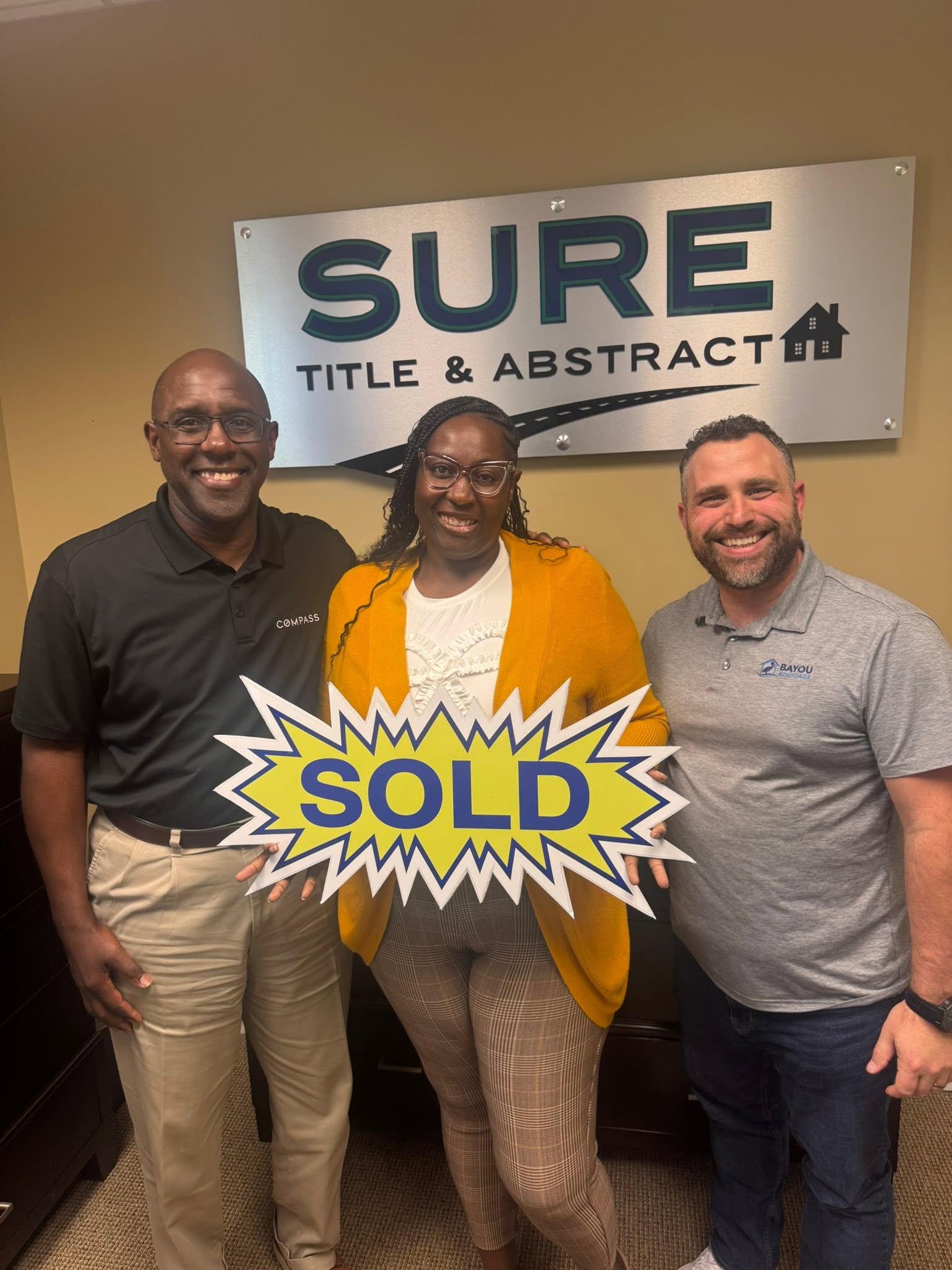
Real Closings
Real Clients.
Real Closings.
Real families we have helped get from pre-approval to keys in hand.





Find Out Where You
Actually Stand
A soft credit check tells you what you qualify for before anyone pulls hard credit. If the numbers say wait, I will tell you that too, and then we make a plan to fix whatever is in the way.
See What I Qualify ForMortgages by Channing · 337-476-2623 · Licensed across Louisiana · NMLS #1660690